
Island hopping is the main reason people come to El Nido, and the boats are generally part of a well-run routine. Still, safety standards vary between operators, and a few simple checks can make a real difference. This guide focuses on life jackets and boat safety specifically for first-time tour guests, parents and weaker swimmers who want to know what to look for before stepping aboard, what to ask the crew and when to politely say no.
- Why Life Jackets Matter in Bacuit Bay
- What a Good Life Jacket Looks Like
- Fit Guide by Traveler Type
- Questions to Ask Before You Book
- Weather, Cancellations and Your Rights
- On the Boat: Briefing and Behavior
- Traveling With Kids and Teens
- When to Walk Away
- Boat Condition: What You Can See From the Pier
- Swimming Ability: Be Honest With the Crew
- Emergency Basics Every Guest Should Know
- A Pre-Departure Safety Checklist
- Frequently Asked Questions
Why Life Jackets Matter in Bacuit Bay
The calm, turquoise water of Bacuit Bay can look harmless, but conditions change quickly. Afternoon wind, passing squalls and swells between islands can turn a gentle trip into a bumpy one, and snorkeling stops often put you in water with currents you cannot see from the boat. A properly fitted life jacket is the simplest piece of safety equipment you can use, and it matters most for people who tire easily or are not strong swimmers.
Most standard tours include life jackets in the price, and crews usually offer them at snorkel stops. The problem is not availability so much as fit and condition. Jackets that are too loose ride up over your face, and worn foam or broken buckles reduce their value. A few minutes of checking at the pier is worth more than any later regret.
What a Good Life Jacket Looks Like
You do not need technical knowledge to judge a jacket. Use the checklist below before you leave the beach, and ask for a different one if anything looks wrong.
- Bright color with intact reflective strips or panels, not faded or sun-bleached to gray.
- Firm, springy foam with no flattened patches, tears or crumbling edges.
- Working buckles and straps that tighten without slipping.
- A crotch strap or similar fastening so the jacket cannot ride up when you are in the water.
- A snug fit: when you lift the shoulders of a fastened jacket, it should not move above your ears.
Fit Guide by Traveler Type
Different travelers need different things from a jacket, so it helps to know what to request. The table below summarizes the most common situations.
| Traveler | What to request | Common problem | Quick fix |
|---|---|---|---|
| Adult beginner swimmer | Full-size jacket worn all trip | Jacket loose at chest | Tighten straps and add the crotch strap |
| Strong swimmer | Jacket kept within reach | Leaving it in the boat | Wear it at deep stops anyway |
| Child under 12 | Child-sized jacket with head support | Adult jacket handed over | Ask the crew for a proper kids size or bring your own |
| Toddler | Own child-rated jacket, adult within arm reach | No suitable size onboard | Bring a rated jacket from home |
| Older traveler or low mobility | Jacket plus a hand from the crew | Difficulty climbing the ladder | Ask to board and exit via the beach side |
Questions to Ask Before You Book
Safety standards are rarely advertised, so you often have to ask. Good operators will answer without hesitation, while vague replies are a red flag. If you are comparing routes, our guides to Tour A and Tour C show how stops and sea exposure differ, which affects how much margin you want.
Is there a life jacket for every passenger?
The answer should be yes, with spares. If the count is tight, choose another boat.
Do you carry a first-aid kit and a working radio or phone?
Ask where they are kept. A crew that can show you the kit is usually well organized.
What is the maximum number of passengers?
A crowded deck makes it harder to move, brief and assist everyone. Smaller groups tend to be calmer and easier to supervise.
Who makes the weather call?
The Philippine Coast Guard and local authorities can restrict sailing during rough conditions. A responsible operator follows those decisions instead of pressing ahead.
Weather, Cancellations and Your Rights
El Nido tours can be canceled or shortened when conditions are unsafe, particularly in the rainy season and during typhoon warnings. Check the forecast on PAGASA and the marine outlook on weather.com the evening before, and treat a cancellation as good judgment rather than an inconvenience.
Money matters are part of safety too, because travelers sometimes feel pressure to sail in poor conditions to avoid losing a payment. Our guide to tour cancellations and refunds explains what to expect and how to ask. If you struggle on rough water, read the seasickness remedies guide before you go.
On the Boat: Briefing and Behavior
A short safety briefing at the start of the trip is a good sign, even if it is only a few sentences about jackets, the ladder and what to do if someone falls overboard. Pay attention, even if you have done it before. Stay seated while the boat is moving, keep hands inside the outrigger, and store valuables in a dry bag. A waterproof pouch for your phone is useful, and our note on power banks and charging on boat tours covers keeping devices alive without leaving them exposed to splashes.
At snorkel stops, keep your jacket on if you are unsure, stay near the boat and avoid jumping from the outrigger or cliffs unless the crew approves it. Mark where the boat is before you swim away, and signal the crew if you feel tired or cold. Sun protection and hydration are part of safety as well, since heat exhaustion can build up quietly on a long open-deck day.
Traveling With Kids and Teens
Families should treat life jackets as non-negotiable for children, including confident swimmers, because tired kids can struggle quickly in open water. Bring a rated child jacket if you can, and show the crew that it fits. Teenagers often push limits, so set clear rules for jumping, swimming distance and staying in view. Our El Nido with teenagers guide includes activity ideas that keep older kids engaged without taking risks.
When to Walk Away
Trust your instincts. If the boat is visibly overloaded, if the engine sounds poor, if jackets are missing or broken, or if the crew dismisses reasonable questions, you can decline and look for another operator. A short delay is far cheaper than an incident. Report serious concerns to your accommodation or to local tourism authorities, and leave honest reviews so other guests can choose well. Most operators in El Nido take their work seriously, and the best ones welcome informed guests who ask good questions.
Boat Condition: What You Can See From the Pier
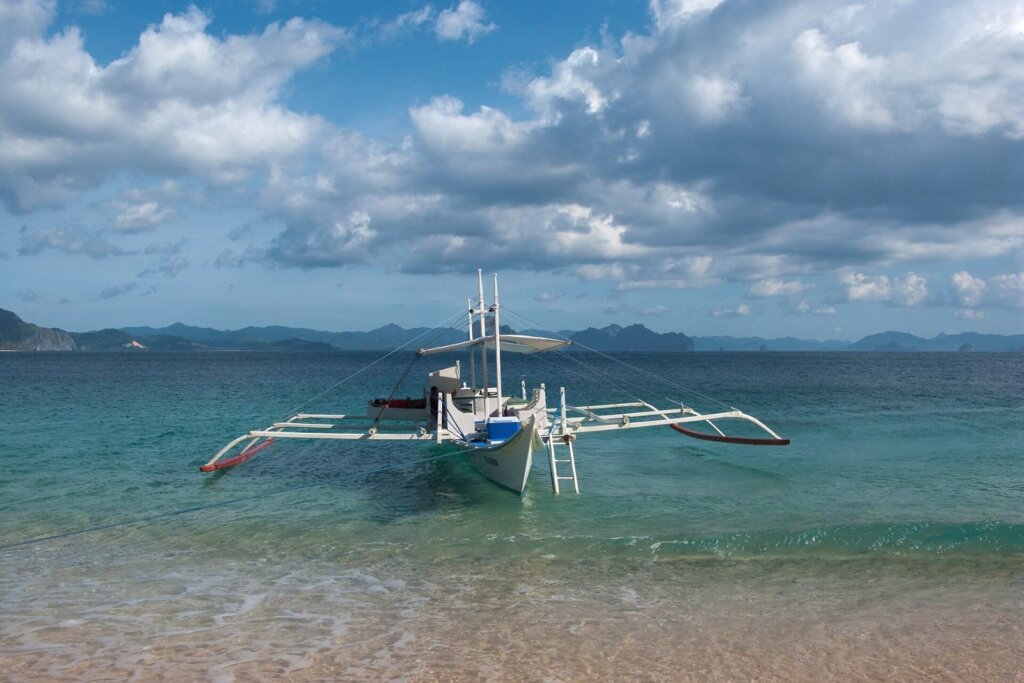
You can learn a lot about an operator by looking at the boat for two minutes. Traditional outrigger boats, known locally as bancas, should have sound outriggers with secure lashings, a clean and dry deck, a working canopy for shade and no obvious fuel smell or leaks. Look at how the crew handles the loading: a good crew helps older guests and children aboard, keeps walkways clear and does not rush anyone. Check that life jackets are stored where passengers can reach them rather than buried under coolers, and that the engine starts without drama. None of this requires expertise, only attention, and it often reveals more than a price list or a polished booking page.
Swimming Ability: Be Honest With the Crew
Guides cannot protect someone whose ability they do not know. At the start of the trip, tell the crew if you are a weak swimmer, have a medical condition such as asthma or a heart problem, or are nervous in open water. They can pair you with a guide, choose calmer snorkel spots and keep the boat close. Guests who stay quiet to avoid fuss are the ones most likely to get into trouble. If you are traveling in a group, agree on a buddy system, count heads at every stop and make sure nobody swims toward channels where boats pass. A few calm minutes of planning keeps the day relaxing for everyone.
Emergency Basics Every Guest Should Know
Learn three simple things before you sail. First, know the number of your accommodation and your tour operator so you can reach them from shore if plans change. Second, remember that in the Philippines the national emergency hotline is 911, although mobile coverage on remote islands can be patchy, so tell someone onshore your route and expected return time. Third, carry a small personal kit with plasters, antiseptic, any prescription medicine and oral rehydration salts. If someone falls overboard, point at them, shout clearly and keep your eyes on them until the crew reaches them. These habits are simple, but they turn a stressful moment into a manageable one.
A Pre-Departure Safety Checklist
Before you leave the pier, confirm four things: every passenger has a fitted jacket, the crew has shown you the first-aid kit and a working communication device, the weather outlook for the day has been checked, and you know the stop order and approximate return time. Pack reef-safe sunscreen, a dry bag, water, a hat and any medication you need. With these basics covered, you can relax and enjoy the lagoons knowing the important decisions were made calmly on land.
Frequently Asked Questions
Are life jackets included on El Nido island hopping tours?
On standard shared tours they are generally provided, but you should still check that there is one for every passenger and that it fits properly.
Can I bring my own life jacket?
Yes, and it is a good idea for young children or anxious swimmers. Make sure it is rated and fits snugly.
Do I have to wear a life jacket while snorkeling?
Many operators strongly encourage it, and it is wise for weaker swimmers. Wearing one also conserves energy, so even confident swimmers may prefer it at deep stops.
What happens if the weather turns bad during a tour?
The crew should shorten the route or return to shore. Follow their instructions and ask about refunds or rescheduling afterward.
Is El Nido safe for non-swimmers?
Many non-swimmers enjoy the tours with a well-fitted jacket and a nearby crew member. Tell the guide in advance so they can keep an eye on you.