
Most visitors explore El Nido by boat, tricycle or rented scooter. Very few think about a bicycle — which is a shame, because the coastal roads north and south of town pass rice fields, quiet barangays and empty beaches at exactly the right speed to enjoy them. Cycling also sidesteps two common frustrations: haggling tricycle fares and needing a motorbike license.
This guide focuses on cycling specifically for active travelers who are comfortable riding in tropical heat and want to explore El Nido’s mainland on their own schedule. It covers realistic routes, what kind of bike to rent, road conditions, safety, and how to fit a ride around island-hopping days. If you would rather have an engine, see our motorbike rental guide instead.
Is El Nido Good for Cycling?
Yes — with caveats. The main road through El Nido is part of the national highway that runs up the west side of northern Palawan. It is paved along most of the stretch between Corong-Corong and the turn-off for Nacpan, and traffic is light compared with any Philippine city. The scenery is excellent: limestone cliffs, coconut groves, mangroves and occasional sea views.
The caveats are heat, hills and the final stretches to beaches. Midday temperatures regularly sit above 30°C, humidity is high, and several climbs between town and the northern beaches are short but steep. Access roads to beaches such as Nacpan and Duli are partly unpaved and become muddy after rain. A mountain bike or sturdy hybrid is therefore far better than a city bike.
Best Cycling Routes Around El Nido
Distances below are approximate one-way figures from El Nido town proper. Use a navigation app with offline maps — OpenStreetMap-based apps tend to show the small barangay roads better than some alternatives.
| Route | One-way distance | Difficulty | Surface | Best for |
|---|---|---|---|---|
| Town → Corong-Corong → Las Cabañas | ~5–6 km | Easy | Paved, short dirt approach | Sunset ride, beginners |
| Town → Marimegmeg / Caalan coast | ~4–7 km | Easy–moderate | Paved with side lanes | Morning loop, cafés |
| Town → Nacpan Beach | ~17–20 km | Moderate–hard | Highway + rough access road | Full-day adventure |
| Town → Duli Beach | ~25 km+ | Hard | Highway + steep dirt road | Experienced riders |
| Town → Bucana / rice field backroads | Flexible, 10–20 km loops | Easy–moderate | Mixed | Rural scenery, photography |
1. Las Cabañas sunset ride (easy)
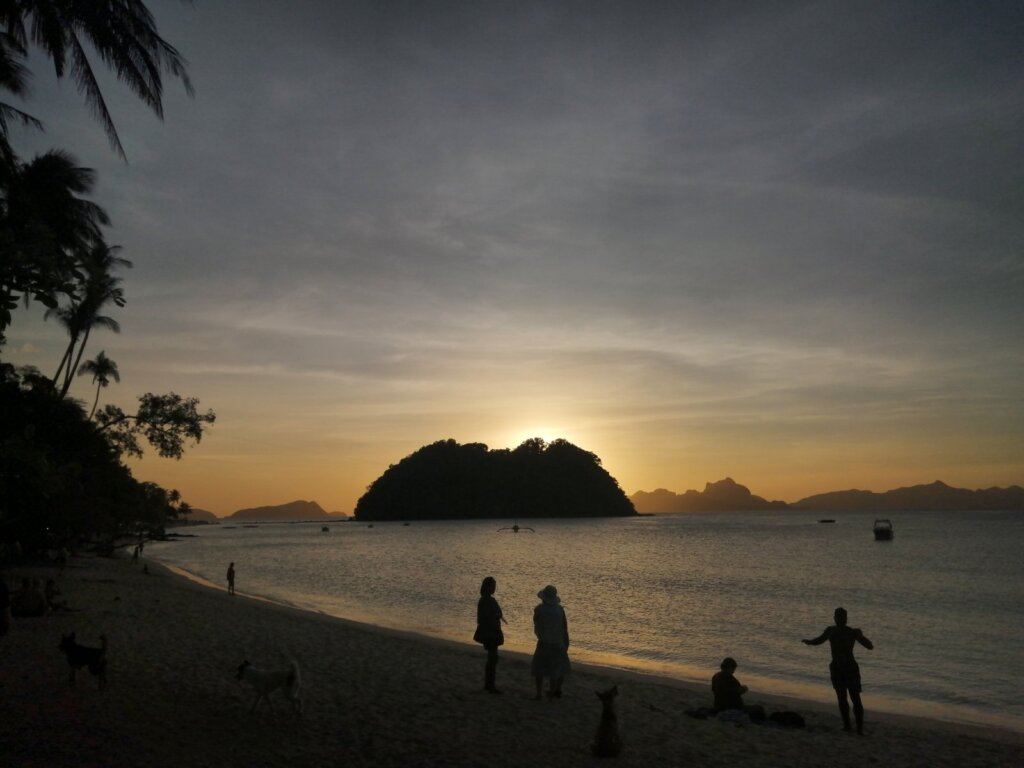
The most rewarding short ride heads south through Corong-Corong to Las Cabañas Beach. It is mostly flat, passes plenty of cafés and finishes at one of the best sunset beaches on the mainland. Leave town around 4:00 pm, watch the sunset, and ride back on the lit section of road with a front light. Our Nacpan vs Las Cabañas comparison explains what each beach offers once you arrive.
2. Nacpan Beach full-day ride (moderate to hard)
Nacpan’s four-kilometer stretch of golden sand is the classic long ride. The highway section involves rolling hills; the final turn-off toward the beach is a rougher road that can be sandy or muddy depending on season. Start no later than 6:30 am to cover the hardest section before the heat builds, rest at the beach through midday, and return after 3:00 pm. Many riders choose to put their bike on a tricycle or van for the return leg — agree on this with your rental shop beforehand.
3. Rice field and barangay loops (easy to moderate)
Inland from the highway are farm roads through rice paddies and small villages. These are ideal for early-morning rides when mist still hangs below the cliffs. Expect friendly greetings, dogs, chickens and the occasional carabao. Ride slowly through villages and be respectful when taking photos of homes and people.
4. Duli Beach (experienced riders only)
Duli is a surfing beach farther north with a steep, rough final approach. In dry months it is a challenging but memorable ride; in the wet season it can be impassable by bicycle. Only attempt it with a well-maintained mountain bike, plenty of water and a backup plan for the return.
Renting a Bicycle in El Nido
Bike rentals are far less common than scooter rentals, so it pays to ask around. Some guesthouses keep a few bicycles for guests, a handful of tour and rental shops in town offer mountain bikes, and certain resorts provide them free or for a small fee. Approximate 2026 rates:
- Basic bike from a guesthouse: roughly ₱200–400 per day
- Mountain bike from a rental shop: roughly ₱400–800 per day
- Guided bike tour (where available): priced per person and usually includes the bike, helmet and water
Before you ride away, check the following:
- Brakes work firmly on both wheels — essential on the downhills.
- Tires are properly inflated and have tread; ask for a pump and patch kit.
- Gears shift cleanly across the range you will need on hills.
- A helmet is provided (if not, ask — or consider bringing your own).
- You have a lock and know where it is safe to leave the bike.
Bicycle vs Scooter vs Tricycle
How does pedal power compare with the usual options? The answer depends on distance and how much you value the journey itself.
- Bicycle: cheapest, quiet, great exercise and scenery. Limited by heat and distance; long rides need early starts.
- Scooter: fast and flexible for Nacpan and beyond, but requires confidence on rough roads and a valid license for insurance purposes.
- Tricycle: zero effort and handy for short hops and late returns. Fares add up over a week; see our tricycle fares guide for typical prices.
A combination often works best: bicycle for local loops and sunsets, tricycle or van for the return from long rides, and boats for the islands.
Heat, Hydration and Timing
The biggest risk for cyclists in El Nido is not traffic but heat. Build your ride around these principles:
- Ride early or late. Aim to be off the bike between roughly 10:30 am and 3:00 pm.
- Carry more water than you think. At least 1.5–2 liters for short rides and 3 liters or more for Nacpan, plus electrolytes. Sari-sari stores along the highway sell drinks, but they can be spaced out.
- Protect your skin. Long sleeves, sunglasses and reef-safe sunscreen help — our heat and sun safety guide covers the warning signs of heat exhaustion.
- Check the weather. Afternoon thunderstorms are common in the wet season. Monitor PAGASA forecasts and avoid riding during heavy rain, when visibility and road grip both drop.
The World Health Organization’s heat and health fact sheet is a useful primer on heat-related illness for anyone exercising in tropical conditions.
Road Safety Tips for Cyclists
- Keep right. The Philippines drives on the right, so ride on the right-hand side of the road, with traffic.
- Expect overtaking vans. Transfer vans between Puerto Princesa and El Nido move quickly. Ride predictably and pull over on narrow climbs if a vehicle is stuck behind you.
- Use lights after 5:30 pm. Dusk falls fast in the tropics and many road sections are unlit.
- Watch for animals and potholes. Dogs, goats and chickens wander onto the road; post-storm potholes can be deep.
- Carry basics. Phone with offline map, small cash, ID, a basic first-aid kit and the rental shop’s phone number.
What to Pack for a Day on the Bike
A small backpack or handlebar bag is enough for most rides. For a full day to the northern beaches, pack the following:
- Water and electrolytes: two large bottles minimum, plus sachets to mix in.
- Snacks: bananas, bread or energy bars from town — options thin out north of Corong-Corong.
- Dry bag: keeps your phone and cash safe from sudden showers and wet beach landings.
- Swimwear and a light towel: you will want a swim at the end of the ride.
- Padded shorts or a gel seat cover: rental saddles are often hard.
- Front and rear lights: even if you plan to be back before dark.
- Basic repair kit: spare tube or patches, tire levers and a mini pump.
For broader packing advice, our boat tour packing guide covers sun protection and waterproofing items that double up nicely for cycling days.
Fitting a Ride into Your El Nido Itinerary
Island-hopping days start early and return mid-afternoon, which leaves a natural window for a short sunset ride to Las Cabañas. Save the long Nacpan ride for a non-tour day — ideally your rest day, if “rest” for you includes 40 km of pedaling. A sample week might look like this:
- Day 1: arrive, short evening ride to Corong-Corong for dinner.
- Days 2–3: island tours, sunset ride on one evening.
- Day 4: early start to Nacpan, beach day, tricycle back with the bike.
- Day 5: rice field loop at sunrise, café brunch, relaxed afternoon.
Final Thoughts
Cycling is one of the most underused ways to experience El Nido. It is cheap, quiet and gives you a side of northern Palawan that boat tours never show. Pick the right bike, respect the heat, start early, and you will come home with memories of rice terraces at dawn and empty roads at sunset — not just lagoons.
Frequently Asked Questions
Can you rent a bicycle in El Nido?
Yes, but bicycles are less common than scooters. Some guesthouses and resorts lend bikes to guests, and a few rental shops in town offer mountain bikes for roughly ₱400–800 per day in 2026.
How far is Nacpan Beach from El Nido town by bike?
Nacpan is roughly 17–20 km one way, including a rough access road at the end. Plan a full day, start early, and consider a tricycle for the return trip.
What is the easiest bike ride in El Nido?
The ride from town through Corong-Corong to Las Cabañas Beach is about 5–6 km, mostly flat and ends at a popular sunset beach.
Is it safe to cycle in El Nido?
It is reasonably safe if you ride on the right, use lights at dusk, watch for fast transfer vans and animals, and avoid the hottest hours and heavy rain.
When is the best time of year to cycle in El Nido?
The dry months from about January to April offer the most reliable roads, while early mornings year-round are the most comfortable time to ride.