
Most visitors come to El Nido for its beaches, lagoons, and island-hopping tours. But beneath the stunning natural scenery lies a layered history stretching back thousands of years — indigenous sea nomads, Spanish colonial history, Japanese occupation, post-war fishing communities, and a modern conservation transformation that turned a declining fishing town into one of Southeast Asia’s most celebrated eco-tourism destinations. This is the history and heritage of El Nido.
- Ancient History: The Tagbanua People
- The Name “El Nido” — A Colonial Legacy
- Spanish Colonial Period (1565–1898)
- American Colonial Period (1898–1946)
- World War II and Japanese Occupation
- Post-War Development: The Fishing Era
- The Conservation Turning Point: El Nido Resorts and Marine Reserves
- The Rise of Eco-Tourism (1990s–Present)
- El Nido’s Cultural Heritage Today
- UNESCO and World Heritage Recognition
- Explore El Nido’s Living Heritage
Ancient History: The Tagbanua People
Long before the first tourist set foot on El Nido’s beaches, the Bacuit Archipelago was home to the Tagbanua — one of the Philippines’ oldest indigenous peoples, with roots in the region stretching back at least 50,000 years, according to archaeological evidence from Palawan caves.
The Tagbanua are traditionally a seafaring people, deeply connected to the marine environment of Palawan’s coastline. Their relationship with the natural environment was — and continues to be — governed by a sophisticated set of customary laws and practices:
- Sacred lagoons: Several of the lagoons now visited by tourists (including areas of the Big Lagoon and Small Lagoon) were historically considered sacred Tagbanua territory. Access was restricted or ceremonially controlled.
- Edible bird’s nest harvesting: The name “El Nido” comes from the Spanish for “the nest” — a reference to the swiftlet nests harvested from the limestone cliffs by Tagbanua communities for centuries. These nests, made from the birds’ saliva, were (and remain) prized in Chinese cuisine as the primary ingredient in bird’s nest soup.
- Sustainable fishing: Traditional Tagbanua fishing methods were designed around sustainability — specific fish species were off-limits during breeding seasons, and certain reef areas were off-limits to allow recovery.
Today, the Tagbanua retain ancestral domain rights over significant areas of the Bacuit Archipelago, including some areas now managed as marine protected zones. Their ancestral land certificate, issued in 1998, covers approximately 22,000 hectares.
The Name “El Nido” — A Colonial Legacy
The municipality’s Spanish name — El Nido, meaning “The Nest” — reflects the most economically significant product of the region during the colonial period: swiftlet bird’s nests.
The limestone cliffs of the Bacuit Archipelago are home to colonies of Aerodramus fuciphagus (the edible-nest swiftlet), whose nests made entirely of hardened bird saliva have been harvested from cliff faces for centuries. During the Spanish colonial period (1565–1898), this trade was formalized and taxed, with nests exported to China via Manila.
The bird’s nest trade remains economically significant today, though now regulated and largely controlled by the Tagbanua. A single kilogram of white nest can fetch $2,000–5,000 USD on the Chinese market.
Spanish Colonial Period (1565–1898)
Spanish colonization of the Philippines began in 1565, though Palawan’s remote northern reaches were among the last territories to come under significant colonial influence. El Nido and the Bacuit Bay area were long considered too remote and difficult to administer effectively.
The Spanish impact on El Nido was primarily:
- Missionary activity: Catholic missions were established across Palawan, and the Tagbanua people were subject to varying degrees of conversion pressure, though many maintained traditional spiritual practices.
- Trade formalization: The bird’s nest trade was taxed and regulated.
- Naming conventions: Spanish names were applied to geographical features — hence “El Nido,” “Palawan” (derived from earlier Malay/Chinese navigational terms), and many other place names still in use today.
Spanish control of Palawan was challenged repeatedly by Moro (Muslim) raiders from Mindanao and Sulu, and the northern coast of Palawan (including the El Nido area) was regularly raided for slaves during the 17th and 18th centuries.
American Colonial Period (1898–1946)
Following Spain’s defeat in the Spanish-American War, the Philippines was ceded to the United States in 1898. For El Nido and Palawan, American colonial rule brought:
- Administrative modernization: El Nido was formally organized as a municipality in the early American colonial period.
- Road and infrastructure development: Limited infrastructure connecting Palawan’s communities began under American administration.
- Fishing industry expansion: Commercial fishing in Palawan expanded significantly during this period.
World War II and Japanese Occupation
The Japanese occupation of the Philippines (1941–1945) left lasting marks on Palawan, including a tragic and significant chapter near El Nido’s neighboring town of Puerto Princesa.
In El Nido specifically, Japanese forces established a presence during the occupation period. The remote limestone caves and islands of the Bacuit Archipelago served as strategic hideouts and refuge points during the conflict. Local oral history records accounts of guerrilla resistance and civilian hardship during this period.
The broader Palawan experience during World War II included one of the Pacific War’s most notorious incidents: the Palawan Massacre of December 1944, in which 139 American POWs were killed by Japanese forces at Puerto Princesa. This event was a significant factor in accelerating American liberation operations in the Philippines.
Post-War Development: The Fishing Era
In the decades following Philippine independence (1946), El Nido developed primarily as a fishing community. The waters of the Bacuit Archipelago were extraordinarily rich in marine life — Napoleon wrasse, grouper, sea turtles, sharks, and massive schools of reef fish drew commercial fishing operations to the area.
By the 1970s and 1980s, however, destructive fishing practices were having a severe impact on the Bacuit Bay ecosystem:
- Dynamite fishing: Blast fishing destroyed coral reef structures across the archipelago.
- Cyanide fishing: Sodium cyanide was used to stun reef fish for the live aquarium trade, devastating reef ecosystems.
- Overfishing: Commercial fishing severely depleted fish stocks.
By the late 1980s, the Bacuit Bay ecosystem was in crisis — and the region’s future as a destination was uncertain.
The Conservation Turning Point: El Nido Resorts and Marine Reserves
The transformation of El Nido began in the late 1980s through a combination of government intervention and private sector vision.
El Nido Resorts — established in 1983 on Miniloc Island by a group of Filipino businessmen — became a pioneer of sustainable luxury eco-tourism in the Philippines. The resort partnered with the national government and international conservation organizations to advocate for marine protected status for the Bacuit Archipelago.
Key conservation milestones:
- 1984: Initial fish sanctuary declarations in parts of Bacuit Bay
- 1991: El Nido Marine Reserve established (10,000+ hectares)
- 1998: Tagbanua ancestral domain certificate issued
- 2007: El Nido-Taytay Managed Resource Protected Area expanded to 96,000+ hectares
The establishment of protected areas ended destructive fishing within the reserve boundaries and allowed the ecosystem to begin recovering. Today, the Bacuit Bay reef system is considered one of the most biodiverse in the Philippines — a remarkable conservation success story.
The Rise of Eco-Tourism (1990s–Present)
With the marine reserve established and reef recovery underway, El Nido began attracting international attention as a diving and snorkeling destination through the 1990s. The growth was gradual but accelerating:
- 1990s: Backpacker trail develops; small guesthouses open in El Nido town
- 2000s: Island hopping tours systematized; budget airlines improve access to Puerto Princesa
- 2012: Puerto Princesa Underground River (Palawan) named one of the New Seven Wonders of Nature — dramatically increases international awareness of Palawan
- 2014–2016: El Nido regularly appears on global “world’s best” beach lists; direct flights to Lio Airport begin
- 2018–2019: El Nido receives 250,000+ annual visitors; overcrowding concerns begin
- 2020–2021: COVID-19 pandemic halts tourism; allows reef and marine life partial recovery
- 2022–present: Tourism rebounds strongly; new carrying capacity regulations introduced
El Nido’s Cultural Heritage Today
Despite rapid tourism development, El Nido retains meaningful cultural heritage:
Tagbanua Cultural Practices: The Tagbanua community maintains traditions including the Pagdiwata (thanksgiving ritual), traditional weaving, and oral poetry. Some Tagbanua communities in the El Nido area participate in cultural tourism programs, offering visitors a window into indigenous heritage.
Traditional Fishing: While commercial fishing is restricted within the marine reserve, traditional small-scale fishing by local communities continues under customary rights arrangements.
Bird’s Nest Harvesting: The swiftlet nest harvest — the practice that gave El Nido its name — continues today, primarily by Tagbanua harvesters using traditional methods on the limestone cliffs of the archipelago.
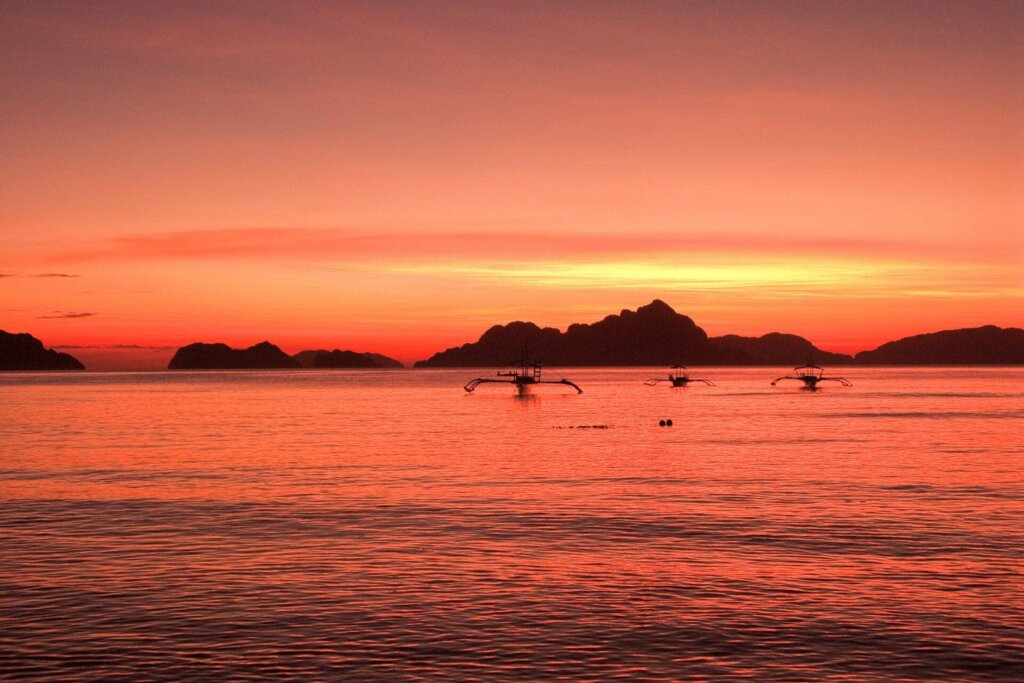
Fisherfolk Heritage: El Nido town’s fishing heritage is evident in the wooden bancas (outrigger boats) lining the waterfront — the same boat design used by generations of Palawan fishermen, now repurposed as island-hopping tour vessels.
UNESCO and World Heritage Recognition
The Puerto Princesa Subterranean River National Park was inscribed as a UNESCO World Heritage Site in 1999. El Nido’s Bacuit Archipelago itself is not currently a UNESCO World Heritage Site, though its ecological significance has been recognized through multiple national and regional protected area designations. Conservation advocates continue to pursue enhanced international recognition for the wider Palawan marine ecosystem.
Explore El Nido’s Living Heritage
The best way to appreciate El Nido’s history is to spend time with it — paddling through lagoons that Tagbanua navigated for millennia, snorkeling reefs that have recovered from near-destruction through conservation, and walking through a town that has transformed from a remote fishing village into one of the Philippines’ great tourism destinations in a single generation.
Start with our 3-day El Nido itinerary and our guide to El Nido island hopping tours — each stop on the tours carries layers of history that make the natural beauty even richer. For accommodation, our best hotels in El Nido guide helps you find a base that connects you to the destination’s heritage.