The lunch stop is one of the most underrated parts of an El Nido island-hopping day, and also one of the least explained before you book. This guide focuses specifically on what actually shows up on the boat or beach at lunchtime, since “lunch included” on a tour listing tells you almost nothing about portion size, variety, or how it’s served.
- How Lunch Is Usually Served
- What’s Typically on the Table
- Where Lunch Is Actually Served
- Dietary Restrictions and How to Handle Them
- Food Safety Basics for Boat Lunches
- Is the Lunch Worth Factoring Into Your Tour Choice
- Tips for a Better Lunch Experience
- Frequently Asked Questions
- Is lunch always included in El Nido island-hopping tours?
- Can I request a special diet for my boat lunch?
- Is the food on El Nido boat tours safe to eat?
- Are drinks included in the tour lunch?
- Is the food better on private tours than group tours?
- What if I don’t like Filipino food?
- Explore our El Nido Rankings
How Lunch Is Usually Served
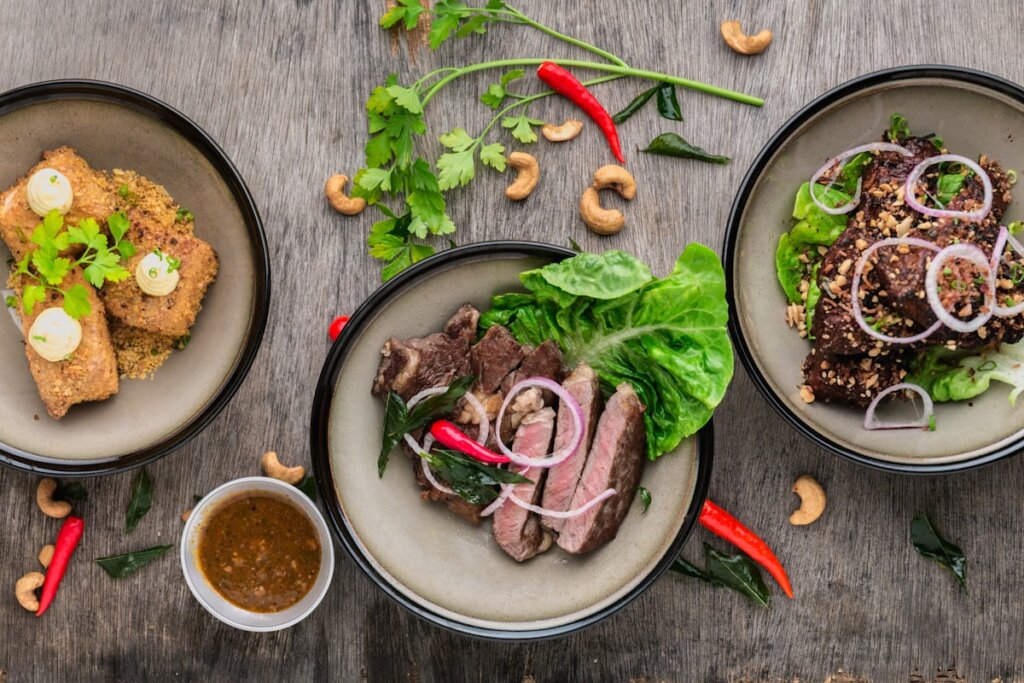
Most group tours serve lunch buffet-style on the boat itself or on a beach stop partway through the route, laid out on a table or simply spread across the deck depending on the operator and the day’s weather. Food is typically prepared that morning, packed in insulated containers, and kept covered until served, with staff portioning generous helpings onto paper or reusable plates. It’s rarely a rushed affair – expect thirty to forty-five minutes to eat, which usually lines up with a natural break between snorkeling stops.
The exact rhythm of the day varies by tour, but a common pattern is two or three stops in the morning, lunch around midday at the halfway point of the route, and one or two more stops in the afternoon before heading back to town. Guides typically announce lunch shortly before arriving so you have a few minutes to towel off and settle in rather than being caught mid-swim when the food is ready.
What’s Typically on the Table
| Category | Common Items | Notes |
|---|---|---|
| Grilled protein | Grilled pork belly (liempo), grilled fish or tuna | The centerpiece of most spreads |
| Stewed dish | Chicken adobo | A Filipino staple, appears on most tours |
| Seafood | Steamed mussels or shrimp | Varies more by operator and season |
| Salads | Tomato and cucumber, mashed eggplant salad | Light, cooling counterpoint to grilled items |
| Rice | Steamed white rice | Usually unlimited or generously portioned |
| Fruit and dessert | Fresh pineapple, watermelon, sometimes halo-halo | Dessert is a nice-to-have, not guaranteed |
This is a representative spread rather than a fixed menu – operators rotate proteins and sides, and higher-end or private tours tend to add more variety, sometimes including a grilled squid or extra seafood course. Sawsawan (a dipping sauce of soy sauce, calamansi, onion, and chili) is nearly universal alongside the grilled items, and it’s worth trying even if the combination sounds unfamiliar.
Portion sizes tend to be generous rather than restaurant-plated, reflecting the fact that guests have usually been swimming and snorkeling for hours by the time lunch arrives and are genuinely hungry. Seconds are typically fine to take if food remains, though it’s worth pacing yourself if you’re planning to swim again shortly after eating. Leftover food is usually packed away by staff rather than left out, both for hygiene and because boats often serve back-to-back tour groups on busy days.
Where Lunch Is Actually Served
Depending on the tour and the day’s conditions, lunch happens either directly on the boat while anchored near one of the stops, or on a beach the group lands at partway through the route – a beach lunch is generally the more memorable version, with shade from limestone cliffs and a swim available before or after eating. Weather and boat traffic both influence which option you get on a given day, so treat it as a pleasant surprise rather than something to request in advance.
A beach lunch spot is usually chosen for practical reasons as much as scenery – enough shade to keep food out of direct sun, calm water for boats to anchor safely nearby, and enough space for several tour groups to spread out without crowding each other. It’s common to share a beach lunch stop with two or three other boats running the same route that day, which makes for a livelier, more social atmosphere than eating alone on your own boat, even if you never formally meet the other groups.
Dietary Restrictions and How to Handle Them
Flag any dietary restriction when you book, not when you board – most operators can accommodate vegetarian, halal, or allergy-related requests if given notice the day before, but have limited ability to improvise on the morning of the tour. If you keep halal or are traveling with someone who does, our halal food and Muslim travel guide covers which tour operators are generally accommodating. Vegetarian and vegan travelers should also check ahead, since a default tour lunch leans heavily on meat and seafood – our vegan and vegetarian dining guide has more detail on what substitutions to expect.
Food Safety Basics for Boat Lunches
Reputable operators keep food properly chilled or covered until serving and replace serving utensils between uses, but as with any buffet-style meal in a warm climate, it’s sensible to eat relatively soon after it’s served rather than letting a plate sit in direct sun. General travel health guidance from sources like the CDC’s travel health resources applies here as it would anywhere: stick to freshly cooked hot food, be cautious with anything that’s been sitting out, and drink bottled or properly treated water rather than tap water on the boat.
Drinks: What’s Included and What Isn’t
Most tours include drinking water, and some throw in soft drinks or juice, but alcohol is rarely part of the standard package – bring your own if you’d like a beer with lunch, or budget for drinks sold separately by vendors at beach stops. Bringing a reusable bottle and topping up from the boat’s water supply, where offered, cuts down on single-use plastic significantly over a full day, an easy way to align your own habits with the broader push against single-use waste in protected coastal areas that groups like the Department of Environment and Natural Resources have been encouraging across Palawan’s tourism zones.
Is the Lunch Worth Factoring Into Your Tour Choice
Lunch quality varies enough between operators that it’s a reasonable factor when comparing quotes, though it shouldn’t be the deciding one – boat condition, group size, and guide quality generally matter more to how your day actually feels. Checking whether an operator is accredited through the Philippine Department of Tourism is a reasonable baseline check regardless of what their lunch spread looks like on paper, since accreditation touches on safety standards that matter far more than menu variety. Our budget versus luxury island-hopping comparison touches on how food quality tends to scale with price, which is useful context if you’re deciding between two otherwise similar quotes.
Tips for a Better Lunch Experience
Wash or sanitize your hands before eating, since you’ve likely been in and out of the water all morning; most boats carry a jug of fresh water for exactly this. Don’t skip breakfast expecting to fill up entirely at lunch – the meal typically lands around midday, later than many people expect on a full activity day, and a light breakfast beforehand helps bridge the gap. A banana, some bread, or a light egg dish before you leave your hotel is usually enough to hold you over – save the bigger appetite for the spread waiting for you on the water. If you’re new to a full day of island-hopping generally, our island-hopping guide for beginners covers other pacing tips that pair well with knowing what to expect at lunch.
Frequently Asked Questions
Is lunch always included in El Nido island-hopping tours?
Yes, for the standard Tour A, B, C, and D packages, lunch is included in the price by virtually every operator in town.
Can I request a special diet for my boat lunch?
Most operators can accommodate vegetarian, halal, or allergy needs with advance notice, ideally given at least a day before your tour.
Is the food on El Nido boat tours safe to eat?
Generally yes with reputable operators, though standard travel food safety habits like eating soon after serving still apply.
Are drinks included in the tour lunch?
Water is almost always included; sodas and juice sometimes are too, but alcohol typically isn’t and is either brought yourself or bought separately.
Is the food better on private tours than group tours?
Often yes, since private and higher-end operators tend to offer more variety and sometimes extra seafood courses, though a good group tour lunch is still substantial.
What if I don’t like Filipino food?
The core ingredients – grilled meat, fish, rice, and fresh fruit – are fairly approachable even for picky eaters, and most operators are used to guests who prefer to stick to the simpler items on the spread. Packing a familiar snack from home as a backup rarely hurts, but in practice most travelers find there’s enough plain rice, grilled protein, and fruit on the table to put together a satisfying plate even without touching the more distinctly local dishes.