TL;DR: Tour D is the easiest El Nido island hopping tour, Tour A is easy-to-moderate, Tour B is moderate because of a cave scramble, and Tour C is the most physically demanding thanks to swim-through beaches, viewpoint steps and rougher open water.
Most comparisons of El Nido’s four standard island hopping tours focus on scenery: which lagoon is prettier, which beach photographs best. This guide focuses on physical difficulty specifically for travelers who need to know how hard each day will be — first-time snorkelers, families with young kids, older travelers, people recovering from injuries, and anyone who gets seasick. We rate each tour on swimming demand, climbing and scrambling, time in open water, and how often weather disrupts it.
If you are still deciding which tours to book at all, start with our Tour A vs Tour B comparison and our guide on how to sequence Tours A–D. Then come back here to match tours to your body and comfort level.
- How We Rated Tour Difficulty
- Difficulty Comparison Table: Tours A–D
- Tour-by-Tour Difficulty Breakdown
- Matching Tours to Your Situation
- Safety Tips That Make Every Tour Easier
- Key Takeaways
- Frequently Asked Questions
- Which El Nido island hopping tour is the easiest?
- Which El Nido tour is the hardest physically?
- Do I need to be a strong swimmer for Tour A?
- Is the Cudugnon Cave on Tour B difficult?
- Can tours be adjusted if one stop is too hard?
- Does difficulty change with the season?
- About the Author
- Explore our El Nido Rankings
How We Rated Tour Difficulty
“Difficulty” on an El Nido boat tour has little to do with distance. You sit on a bangka for most of the day. What makes a tour hard is what happens at each stop. We scored every tour on five factors, each from 1 (very easy) to 5 (demanding):
- Swimming demand: whether you must swim or wade to reach a highlight, or can stay in a kayak or on the boat.
- Scrambling and climbing: rock openings, caves, ladders and steps.
- Open-water exposure: how long the boat spends crossing unsheltered water where swell builds.
- Footing: sharp limestone, coral rubble and slippery entry points.
- Weather sensitivity: how often the route is altered or cancelled.
These ratings assume typical dry-season conditions and a standard shared tour. Operators can shift stop order, and the coast guard and municipal tourism office may close specific sites on short notice. Always check the current itinerary on your tour voucher before paying.
Difficulty Comparison Table: Tours A–D
| Tour | Typical highlights | Swimming | Scrambling | Open water | Overall |
|---|---|---|---|---|---|
| Tour D | Cadlao Lagoon, Paradise Beach, Nat Nat Beach, Bukal Island | 1 | 1 | 2 | Easiest |
| Tour A | Big Lagoon, Small Lagoon, Secret Lagoon, Shimizu Island, 7 Commandos Beach | 2 | 2 | 2 | Easy–moderate |
| Tour B | Snake Island, Cudugnon Cave, Cathedral Cave, Pinagbuyutan, Entalula | 2 | 3 | 3 | Moderate |
| Tour C | Hidden Beach, Secret Beach, Matinloc Shrine, Helicopter Island | 4 | 3 | 4 | Most demanding |
Scores are relative to each other, not to adventure sports. Even Tour C is manageable for a reasonably fit adult wearing a life jacket. The point is to help you plan which day to take it easy and which day needs more energy.
Tour-by-Tour Difficulty Breakdown
Tour D: The Easiest Day on the Water
Tour D stays closest to town and focuses on beaches and the calm water of Cadlao Lagoon. Transfers are short, landings are generally on sand, and there is no cave or rock window to squeeze through. That makes it the default recommendation for seniors, toddlers, pregnant travelers who have cleared travel with their doctor, and anyone who wants a recovery day after a harder tour.
The main effort points are simple: stepping down from the boat into knee-deep water and walking on beaches that can be hot by midday. Water shoes help. If you have limited mobility, our guide for travelers with bad knees covers boarding techniques and which beaches have the gentlest entry.
Best for: families with small children, older travelers, non-swimmers, a lazy final day.
Tour A: Easy to Moderate, Mostly by Kayak
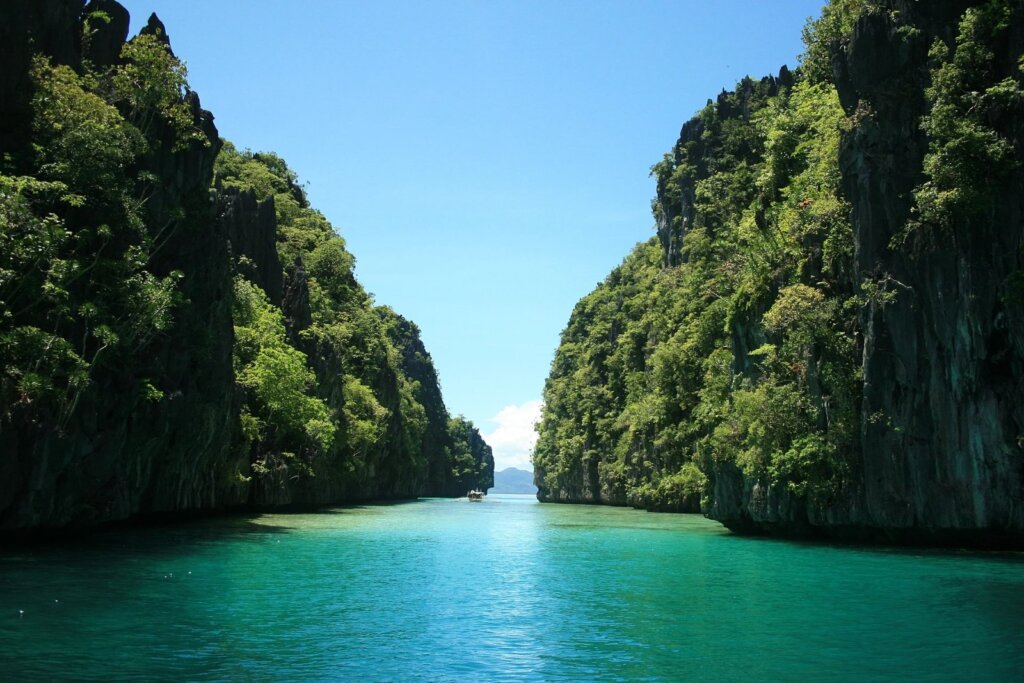
Tour A is the most popular route, and its difficulty is often overestimated. Big Lagoon is explored by kayak or by the boat itself depending on current rules, and paddling is on flat, sheltered water. Small Lagoon is entered through a narrow gap that you can kayak or swim through. Secret Lagoon involves stepping through a small opening in the rock; it is short but the rock can be sharp and slippery.
The rest of the day — snorkeling at Shimizu Island and lounging on 7 Commandos Beach — is easy. The main challenge is crowding: the lagoon entrances get busy at peak hours, and waiting in a kayak queue under strong sun is tiring. Bring a hat and drink water before you feel thirsty.
Kayaking for an hour can tire the shoulders of first-timers. If you have never paddled, share a double kayak with a stronger partner and let them steer. Non-swimmers should read our non-swimmer safety guide first.
Best for: first-timers, couples, families with school-age kids.
Tour B: Moderate, Thanks to One Cave
Tour B mixes easy beaches with one genuinely physical stop. Snake Island’s sandbar is a gentle walk, and the short climb to the viewpoint is optional. Pinagbuyutan and Entalula are relaxed swimming and lunch stops. Cathedral Cave is usually viewed from the boat.
The exception is Cudugnon Cave. Reaching the inner chamber means crouching through a low entrance and moving over uneven rock in dim light. It takes only a few minutes, but it is not ideal if you have knee or back problems, are claustrophobic, or are carrying a small child. You can simply wait on the beach.
Tour B also spends more time crossing open water than Tours A and D. On a windy morning, sit near the middle of the boat where motion is lowest — our best-seat guide explains why.
Best for: travelers who want a bit of adventure without hard swimming.
Tour C: The Most Physically Demanding Route
Tour C has the most dramatic scenery and the highest physical demand. Hidden Beach and Secret Beach are tucked behind limestone walls; depending on tide and swell, reaching them can mean wading over rocks or swimming through a gap where waves surge. Matinloc Shrine includes steps up to a viewpoint, and the route heads farther out into the bay, where swell builds on windy days.
A confident swimmer will find Tour C exhilarating. A nervous swimmer can still join, but should wear a life jacket throughout, use water shoes, and be ready to skip a swim-through if the crew advises against it. Guides are generally cautious and will not take guests through when conditions are unsafe.
Tour C is also the route most often modified or cancelled when the coast guard issues advisories. During amihan months, plan it for the earliest calm morning in your stay and keep a backup day free.
Best for: confident swimmers, active travelers, photographers who want the most dramatic cliffs.
Matching Tours to Your Situation
Here is how we would plan a four-day stay for different travelers, using the difficulty ratings above.
- Family with kids under 6: Tour D and Tour A only. Skip Cudugnon Cave and Tour C’s swim-throughs.
- Older travelers or limited mobility: Tour D first, then Tour A with a private boat so you can set the pace. Consider a private charter.
- Prone to seasickness: Tours D and A on calm mornings; take medication 30–60 minutes before departure if your doctor approves.
- Fit, confident swimmers: Tour C on your calmest forecast day, Tour A next, Tour B as a buffer.
- Short stay (2 days): Tour A plus either Tour C (adventurous) or Tour D (relaxed).
Safety Tips That Make Every Tour Easier
Most difficulty on El Nido tours is about footing, sun and fatigue, not danger. A few habits make a big difference:
- Wear water shoes. Limestone and coral rubble cut feet easily, especially at Secret Lagoon and Tour C beaches.
- Keep your life jacket on during swim-throughs, even if you swim well. Surge can push you against rock. See our life jacket guide.
- Listen to the briefing. The crew explains which stops involve swimming. Our article on the tour safety briefing explains what to ask.
- Protect against heat. Follow general sun-safety guidance from the World Health Organization’s UV index advice: hats, shade breaks and reef-safe sunscreen.
- Check the weather. Look at PAGASA forecasts and any Philippine Coast Guard advisories the evening before.
For broader trip planning, the Philippine Department of Tourism lists accredited operators and current travel requirements.
Key Takeaways
- Tour D is the easiest El Nido tour; Tour C is the most physically demanding.
- Tour A is easier than its reputation — most of the lagoon time is spent in a kayak on flat water.
- Tour B’s only hard stop is Cudugnon Cave, which you can skip.
- Tour C involves swim-throughs and open water; book it on your calmest day and keep a backup.
- Water shoes, a life jacket and early departures make every tour easier.
- Private boats let you skip or swap stops that do not suit your fitness level.
Frequently Asked Questions
Which El Nido island hopping tour is the easiest?
Tour D is usually the easiest. Its stops are mostly calm beaches and Cadlao Lagoon, with short boat transfers and little scrambling, so it suits seniors, young kids and non-swimmers wearing life jackets.
Which El Nido tour is the hardest physically?
Tour C is generally the most demanding. Hidden Beach and Secret Beach can involve swimming or wading through rock gaps, the Matinloc Shrine viewpoint has steps, and the route is more exposed to swell, especially in amihan months.
Do I need to be a strong swimmer for Tour A?
No. Big Lagoon is explored by kayak or boat, and Small Lagoon can be kayaked. Secret Lagoon has a small rock opening you step through. Wear a life jacket and water shoes and you can do most of Tour A comfortably.
Is the Cudugnon Cave on Tour B difficult?
It involves crouching through a narrow entrance and stepping over uneven rock inside. It is short, but people with knee problems, claustrophobia or limited mobility may prefer to skip it and wait on the beach.
Can tours be adjusted if one stop is too hard?
Usually yes. On shared tours you can stay on the boat or beach at any stop. On a private boat you can ask the crew to swap a difficult stop for an easier one, subject to coast guard rules and sea conditions.
Does difficulty change with the season?
Yes. Calm months (roughly March to May) make every tour easier. During windy amihan or stormy habagat periods, exposed routes like Tour C get choppier and may be cancelled or rerouted by the coast guard.
About the Author
This guide was compiled by the El Nido Hotels Ranking editorial team, with input from local operators and ongoing on-the-ground updates.