TL;DR: El Nido’s midday UV index is typically “very high” to “extreme” (often 10 or more on clear days) in every month, peaking around March to May; plan shade from about 10 AM to 3 PM, reapply sunscreen every two hours, and cover up on boats.
El Nido sits at roughly 11 degrees north of the equator, and its sun is far stronger than most visitors from Europe, North America or East Asia are used to. Add long boat days, white sand and reflective water, and sunburn becomes one of the most common ways a holiday gets spoiled. This guide focuses on the UV index by month specifically for travelers planning island hopping and beach days in El Nido, especially fair-skinned visitors, families with children and anyone on medication that increases sun sensitivity.
Our angle is seasonal planning. Most weather guides talk about rain and temperature; here we look at the invisible factor — ultraviolet radiation — and how it changes across the year. Pair this with our El Nido humidity by month guide and water temperature by month guide for a complete picture.
Understanding the UV Index
The UV index is an international scale, promoted by the World Health Organization, that measures the strength of sunburn-producing ultraviolet radiation at a given place and time. The categories are:
- 0–2 Low: minimal protection needed.
- 3–5 Moderate: seek shade at midday, use sunscreen.
- 6–7 High: protection essential; reduce time in the sun from late morning to mid-afternoon.
- 8–10 Very High: extra precautions; unprotected skin can burn quickly.
- 11+ Extreme: avoid midday sun where possible; full protection required.
In tropical latitudes like Palawan, clear-sky midday values frequently reach the very high and extreme categories. The UV index effect is amplified by reflection from sand and water, which matters a lot on boat tours.
El Nido UV Index by Month (Typical Midday Values)
The table below shows approximate, typical clear-sky midday UV levels for El Nido, based on its latitude and seasonal cloud patterns. Actual daily values vary, so treat these as planning guides, not forecasts.
| Month | Typical midday UV (clear day) | Category | Season notes |
|---|---|---|---|
| January | 9–11 | Very High to Extreme | Dry, breezy amihan season; cooler air hides the burn risk |
| February | 10–12 | Very High to Extreme | Clear skies common; peak tour season |
| March | 11–13 | Extreme | Hot and dry; sun climbing toward overhead |
| April | 12+ | Extreme | Among the strongest months; Holy Week crowds |
| May | 12+ | Extreme | Hottest stretch; afternoon storms may build |
| June | 11–12 | Extreme (cloud reduces) | Southwest monsoon begins; sunny breaks still intense |
| July | 10–12 | Very High to Extreme | Cloudier; burns still common on bright days |
| August | 11–12 | Extreme (cloud reduces) | Sun near overhead again; frequent showers |
| September | 10–12 | Very High to Extreme | Often among the wettest months; variable |
| October | 10–11 | Very High to Extreme | Transition month; clearer spells |
| November | 9–11 | Very High to Extreme | Dry season returns; great tour weather |
| December | 8–10 | Very High | Lowest sun angle of the year, but still strong |
The key takeaway: there is no truly “safe” month for unprotected sun in El Nido. Even December, the month with the lowest sun angle, typically reaches the very high category at midday.
Peak Sun Hours and How to Plan Your Day
UV levels in El Nido climb quickly after about 9 AM and are strongest from roughly 10 AM to 3 PM. Unfortunately, that overlaps with the standard island hopping schedule, which usually departs mid-morning and returns mid-afternoon. A smart approach:
- Early morning (6–9 AM): beach walks, swimming, kayaking or a sunrise viewpoint.
- Midday (10 AM–3 PM): if you are on a tour, use the boat canopy and shaded lunch stops; if not, eat lunch indoors, get a massage or take a siesta.
- Late afternoon (3:30 PM onward): beach time and sunset at Las Cabanas or Corong-Corong.
Our month-by-month weather guide helps you combine UV, rain and crowd levels when choosing travel dates.
Why Boat Days Increase Your UV Exposure
Island hopping combines several risk factors at once. You are on open water with limited shade, wet skin makes sunscreen wear off faster, and the sea breeze keeps you feeling cool even while your skin burns. Sand and sea foam also reflect a portion of UV back onto your skin, while snorkeling exposes the back of your neck, shoulders and legs for long periods.
The fix is layering. Wear a rash guard or long-sleeve swim shirt while snorkeling, leggings or board shorts for your legs, and a hat during transfers. Our sunscreen reapplication guide for boat days covers exactly when to reapply on a typical tour.
Choosing Sunscreen for El Nido
Use a broad-spectrum sunscreen of at least SPF 30, as recommended by the American Academy of Dermatology, and apply generously — most people use too little. Water-resistant formulas last longer while swimming, but they still need reapplying after toweling off.
Because El Nido’s reefs are a protected marine area, many travelers choose mineral sunscreens based on zinc oxide or titanium dioxide and avoid ingredients linked to reef stress. See our reef-safe sunscreen guide for what to buy. Pharmacies and convenience stores in town sell sunscreen, but bringing your preferred brand from home is often cheaper.
Special Groups: Kids, Fair Skin and Medications
Children: Young skin burns faster. Use UV swimsuits, hats with neck flaps and shade breaks, and keep infants out of direct midday sun entirely.
Fair or freckled skin: If you burn easily at home, assume you can burn in well under half an hour at midday in El Nido. Cover up rather than relying on sunscreen alone.
Medications: Some antibiotics (such as doxycycline, which some travelers take for malaria prevention), acne treatments and other drugs increase photosensitivity. Ask your doctor or pharmacist before you travel.
Eyes: UV also damages eyes. Wear sunglasses labeled UV400 or 100% UV protection, especially on the water.
If you do get burned, cool the skin with clean water, apply aloe or a soothing moisturizer, drink plenty of fluids and stay out of the sun until it heals. Seek medical care for blistering, fever or dizziness.
UV Risk by El Nido Activity
Not every activity carries the same exposure. Here is how the most popular El Nido experiences compare, and how to adapt each one:
- Island hopping tours (Tours A–D): the highest exposure of any activity, often five to six hours in and around open water. Rash guard, hat and reapplication are essential.
- Snorkeling and lagoon swims: your back and the backs of your legs face the sun the entire time. A long-sleeve swim top and leggings work better than sunscreen alone.
- Kayaking and stand-up paddleboarding: water reflects UV upward onto your face and under your chin; add a cap with a brim and sunglasses with a strap.
- Taraw Cliff and viewpoint hikes: start at sunrise. Exposed rock radiates heat and there is little shade near the top.
- Nacpan and Las Cabanas beach days: rent a cottage or umbrella at midday, and swim early or late.
- Scooter rides to the northern beaches: arms and the tops of your hands burn quickly; wear a light long-sleeve shirt.
Sun-Smart Packing List for El Nido
Packing the right gear does more than any single bottle of sunscreen. Bring a broad-spectrum, water-resistant SPF 30–50 sunscreen (enough for roughly one ounce per full-body application), an SPF lip balm, a long-sleeve rash guard, a wide-brim hat with a chin strap for windy boat rides, UV400 sunglasses, a light sarong or scarf for shade on the boat, and a reusable water bottle. After-sun aloe gel is handy, and oral rehydration salts help if heat and sun leave you drained. Most of these are available in El Nido town, but selection and prices are better at home or in Manila and Puerto Princesa.
Key Takeaways
- UV in El Nido is very high to extreme year-round on clear days; there is no “low UV” season.
- The strongest months are typically March to May, when the sun passes almost directly overhead.
- Rainy-season clouds reduce UV only partly; you can still burn on overcast days.
- Boat days increase exposure because water and sand reflect extra UV and shade is limited.
- Use the WHO rule: when UV is 3 or above, seek shade, cover up and use broad-spectrum sunscreen.
- Schedule beach time early morning and late afternoon; use midday for lunch, lagoon shade or a siesta.
Frequently Asked Questions
What is the UV index in El Nido?
On clear days, the midday UV index in El Nido is typically in the very high (8–10) to extreme (11+) range throughout the year. Exact values change daily with cloud cover, so check a forecast app on the morning of your tour.
Which month has the strongest sun in El Nido?
UV levels are usually highest from about March to May, when the sun is nearly overhead at midday and skies are often clear. They remain high in the wet season on sunny breaks.
Can I get sunburned on a cloudy day in El Nido?
Yes. Thin or broken clouds let a large share of UV radiation through, and many travelers burn on overcast boat days because they feel cooler and skip reapplying sunscreen.
What SPF should I use in El Nido?
Dermatology groups generally recommend a broad-spectrum sunscreen of SPF 30 or higher for outdoor activity, reapplied at least every two hours and after swimming. Choose a reef-friendly formula for island hopping.
What time is the sun strongest in El Nido?
Roughly 10 AM to 3 PM local time. Since most island hopping tours run from about 9 AM to 4 PM, you will be out during peak hours, so plan shade and cover-ups on the boat.
About the Author
This guide was compiled by the El Nido Hotels Ranking editorial team, with input from local operators and ongoing on-the-ground updates.
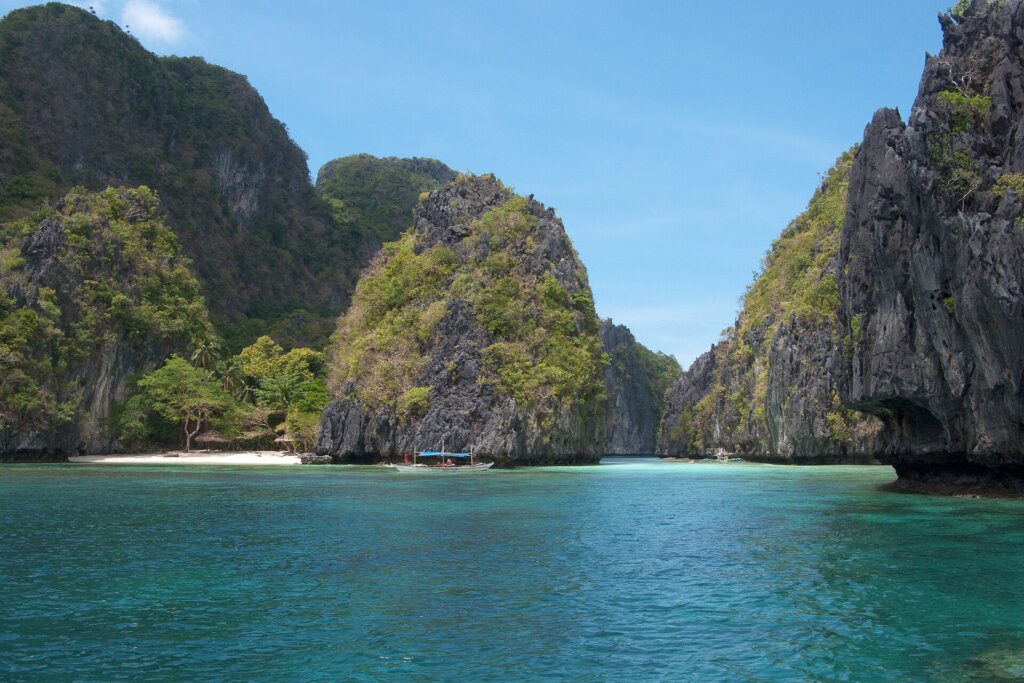
Featured photo: Vyacheslav Argenberg (CC BY 4.0), via Wikimedia Commons.