

Stand on any island-hopping boat in El Nido and you will see two camps: travellers in big, single-window full-face masks, and those with a traditional mask and separate snorkel tube. Both will show you parrotfish and giant clams on the reefs of Bacuit Bay. But they behave very differently in the water, and the choice matters more than most people realise.
This guide focuses on choosing a snorkel mask specifically for El Nido island-hopping tours, where you snorkel from a boat, swim in sheltered lagoons and occasionally face chop and current between islands. We compare full-face and classic masks on safety, comfort, fit, cost and practicality, then match each to a type of traveller. Our unique angle is the El Nido context: short, repeated snorkel stops, shared rental gear and long days in the sun.
The Two Designs Explained
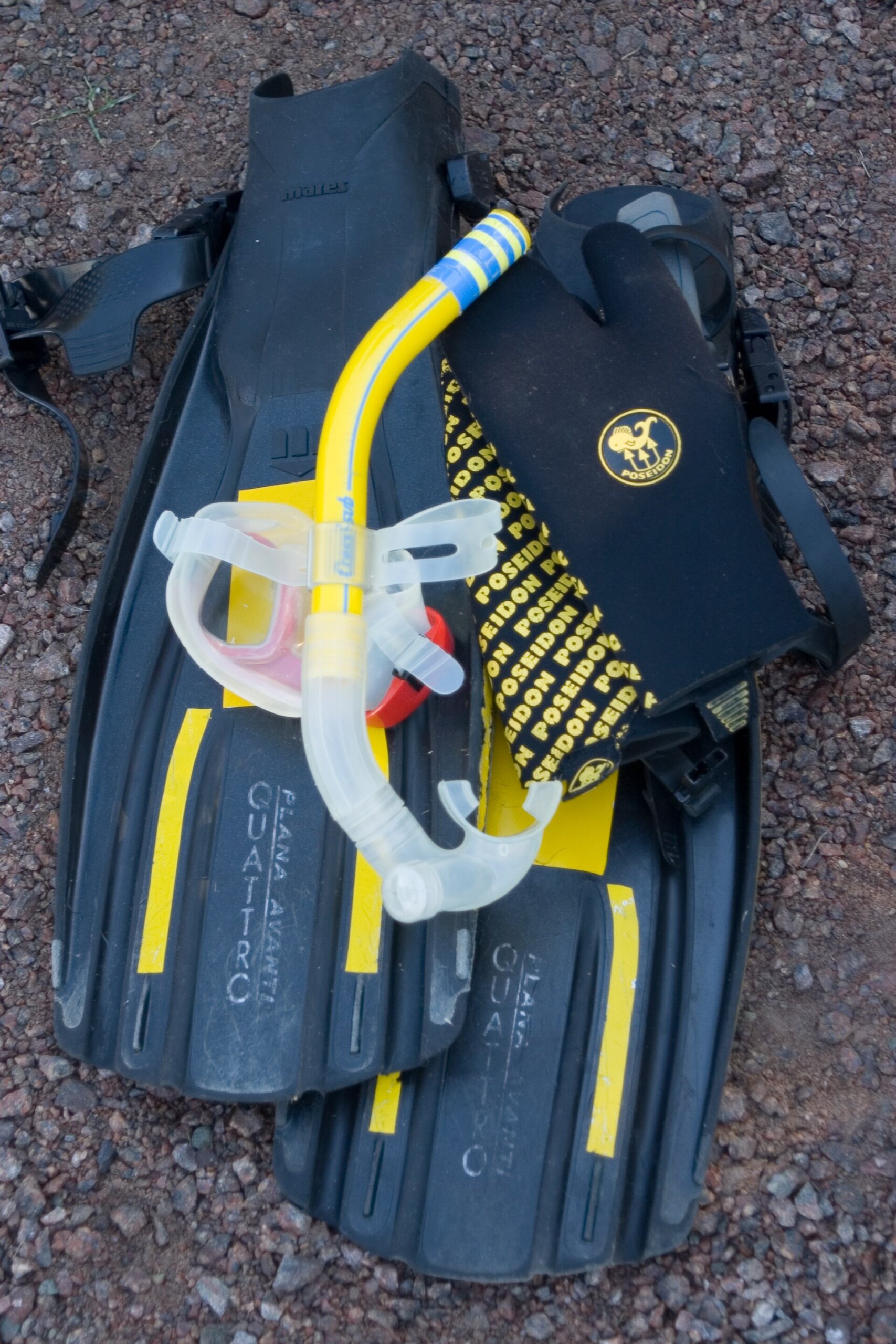
Classic mask and snorkel. A tempered-glass lens covering eyes and nose, sealed with a silicone skirt, plus a separate J-shaped tube you hold in your mouth. Divers and freedivers use this design because you can pinch your nose to equalise pressure and dive below the surface. Variants include “dry-top” snorkels with a valve that blocks splashes.
Full-face snorkel mask (FFSM). A single moulded visor covering the entire face, with an integrated snorkel on top. You breathe naturally through nose and mouth, and the wide window gives a panoramic view. These became popular in the mid-2010s as an “easy” option for beginners. The general snorkeling overview on Wikipedia covers the history of both designs.
Head-to-Head Comparison
| Factor | Full-face mask | Classic mask + snorkel | Better for El Nido |
|---|---|---|---|
| Ease for beginners | Very easy; breathe normally | Takes a few minutes to learn mouth breathing | Full-face (short term) |
| Diving below the surface | Not possible; can’t equalise | Yes; pinch nose to equalise | Classic |
| Air exchange / CO2 concerns | Quality varies; poor designs can re-breathe exhaled air | Short tube; minimal dead space | Classic |
| Removing quickly in trouble | Slower; whole face covered | Spit out snorkel, lift mask | Classic |
| Field of view | Wide, panoramic | Good, slightly narrower | Full-face |
| Fit with beards | Often leaks | Also leaks, but easier to fix | Classic |
| Packing size | Bulky, needs its own bag | Compact | Classic |
| Typical purchase price | PHP 1,200–4,000+ | PHP 600–3,000+ | Similar |
The Safety Question
Full-face masks drew scrutiny after a cluster of snorkelling deaths among visitors in Hawaii in the late 2010s. Investigations did not prove that full-face masks caused those deaths, and many factors (age, heart conditions, swimming ability) were involved. However, dive-safety organisations such as Divers Alert Network (DAN) have highlighted concerns that some cheaper full-face designs may let exhaled air mix with fresh air, raising carbon dioxide levels during exertion, and that the masks are harder to remove quickly. Hawaii’s Department of Land and Natural Resources has published general snorkel-safety advice that applies equally in Palawan: know your limits, never snorkel alone and use flotation if you are not a confident swimmer.
The practical takeaways for El Nido:
- If you use a full-face mask, choose a reputable model with a clearly separated inhale and exhale airflow, and don’t swim hard against current in it.
- If you feel short of breath, headachy or panicky, stop, float on your back and remove the mask.
- Wear a life vest or hold a float if you are not a strong swimmer, whichever mask you choose. Our life jacket and boat safety guide explains what tours provide.
How El Nido Conditions Change the Choice
Most snorkelling in El Nido happens on Tours A and C, at shallow reef stops and inside lagoons (see our El Nido snorkeling spots guide). Three local factors matter:
- Short, repeated stops. You will get in and out of the water four or five times a day. Classic masks are quicker to rinse, defog and put on; full-face masks need more fiddling.
- Chop between islands. Wind-driven waves can splash into the top of a classic snorkel, which is where a dry-top snorkel helps. Full-face masks handle splash well, but a flooded full-face mask is harder to clear.
- Depth and curiosity. Many reef features, from giant clams to turtles, sit a few metres down. If you want to dive for a closer look, you need a classic mask.
Rental Gear on El Nido Tours
Most shared tours include basic classic masks and snorkels. Quality varies: some are fine, others have scratched lenses, worn silicone or loose straps. Full-face masks are less commonly included and sometimes offered as a paid upgrade by sellers on the beach. Before your first stop, check that the skirt seals on your face (press it on without the strap and inhale gently through your nose; it should stay put), and that the snorkel mouthpiece isn’t torn. Many travellers bring their own for hygiene and fit; our rent or bring snorkel gear guide weighs the options, and the foggy mask fixes article solves the most common annoyance.
If you wear glasses, a classic mask with prescription lenses is the clear winner; see prescription snorkel masks for El Nido.
Which Mask Should You Choose?
Choose a full-face mask if:
- You are an anxious beginner who panics with a mouthpiece, will stay at the surface and will use a life vest.
- You plan mostly calm lagoon floating rather than reef exploration.
- You buy a quality model and practise in a pool or calm shallows first.
Choose a classic mask and snorkel if:
- You want to dive down to see turtles, clams and coral details.
- You are a confident swimmer or plan to try freediving or scuba later in your trip.
- You want compact gear that packs easily and a design that is quick to remove.
- You have any heart or respiratory conditions; consult your doctor and stay with the simplest gear.
For children, a properly fitting junior classic mask and a life vest is generally the safest combination. Many full-face masks are sized for adults and fit children poorly.
Fit, Care and Buying Tips
How to Fit-Test Any Mask in 60 Seconds
Fit matters more than design. Use this quick test on the boat, in a shop or at home:
- Hair off the face. Push all hair away from the forehead and temples; a single strand under the skirt breaks the seal.
- No-strap suction test. Place the mask on your face without the strap, inhale gently through your nose and let go. A good fit stays on by suction for several seconds.
- Check pressure points. The frame should not press on the bridge of your nose or your upper lip. For full-face masks, the chin cup should sit under your chin, not on it.
- Strap position. Classic mask straps sit above the ears on the crown of the head, snug but not tight. Over-tightening actually causes leaks by distorting the skirt.
- Breathe at the surface. Float face-down in shallow water for a minute. Any water creeping in, fogging or a feeling of stale air means try another size or model.
Repeat the test with each piece of rental gear before the first reef stop. It takes a minute and saves an afternoon of frustration.
Care and Cleaning in Tropical Conditions
El Nido’s sun and saltwater are hard on gear. Rinse your mask and snorkel in fresh water after each tour day, dry them in the shade (UV degrades silicone and yellows clear skirts) and store the mask in its hard case so the lens doesn’t scratch in your day bag. Never leave a full-face mask on a hot boat deck; the plastic visor can warp. If you share gear between family members, wipe the mouthpiece with an antiseptic wipe. New tempered-glass masks have a factory film that causes stubborn fog; scrub the inside of the lens with non-gel toothpaste once before your trip to remove it.
Buying in El Nido vs Bringing from Home
Dive shops and souvenir stores in El Nido town sell both types, but selection is limited and prices are higher than in big-city sports stores. If you already know which design you want, buy it before the trip and try it on at home: a mask that fits your face is worth more than any brand name. If you buy locally, test the seal in the shop and ask for a dry-top snorkel. Pair your mask with reef booties, since many entry points are rocky; see our water shoes vs reef booties comparison.
Whatever you choose, practise breathing calmly for a minute in shallow water before swimming off the boat, keep your eyes on your group and the boat, and enjoy one of the best shallow-reef seascapes in the Philippines.
Frequently Asked Questions
Are full-face snorkel masks banned in El Nido?
No. They are not banned, but tour crews may advise against them for weak swimmers and they are less commonly included in tour packages. Use a quality model and a life vest.
Can I dive down with a full-face snorkel mask?
Not safely. You cannot pinch your nose to equalise pressure, so diving more than a metre or so causes ear pain. Use a classic mask if you want to dive.
Do El Nido island-hopping tours provide snorkel gear?
Most shared tours include a basic classic mask and snorkel. Quality varies, so check the seal and mouthpiece, or bring your own for better fit and hygiene.
Which mask is best for kids in El Nido?
A properly fitting junior classic mask with a life vest is generally safest. Many full-face masks are adult-sized and fit children poorly.
How do I stop my mask from fogging?
Use a commercial anti-fog gel or a drop of baby shampoo, rinse lightly before use, and keep the mask out of direct sun between snorkel stops.