Walking El Nido town proper at night is generally safe and easy until about 11 pm; carry a headlamp, wear grippy sandals, watch for drains and tricycles, and take a tricycle for dark roads to Corong-Corong, Caalan or the highway.
El Nido town is compact, lively and mostly walkable, yet many first-time visitors are unsure about heading out on foot after sunset. Streets narrow, sidewalks disappear, tricycles share the road with dogs and pedestrians, and some stretches outside the center have little or no street lighting. This guide focuses on walking El Nido town at night specifically for independent travelers staying in town proper, Corong-Corong or Caalan who want to get to dinner, sunset bars and back to their room comfortably and safely without hiring a tricycle every time.
Our unique angle: rather than a general safety overview, we break down the town into walkable zones, describe what each looks like after dark, and give a step-by-step routine you can follow every evening.
- Is El Nido Safe to Walk at Night?
- Night Walking Zones Compared
- Town Proper: The Easiest Area After Dark
- Beachfront, Corong-Corong and Caalan
- Step-by-Step: A Safe Evening Walking Routine
- Common Night Hazards and How to Handle Them
- Late Arrivals and Getting to Your Hotel
- What to Pack for Night Walks
- Key Takeaways
- Frequently Asked Questions
Is El Nido Safe to Walk at Night?
For most visitors, yes. El Nido has a strong tourism economy, a visible tourist police presence in the town center and a community that depends on visitors feeling welcome. Violent crime against tourists is uncommon. The realistic risks at night are more practical than criminal: uneven roads, open drainage channels, motorbikes without lights, unleashed dogs, slippery surfaces after rain and the occasional opportunistic theft of phones left on tables.
Government travel advisories, such as the U.S. State Department’s Philippines page and Australia’s Smartraveller, recommend normal precautions in tourist areas like Palawan and highlight petty crime and road safety as the main concerns. Treat El Nido after dark the way you would any busy beach town: aware, not anxious.
Night Walking Zones Compared
| Zone | Lighting After Dark | Foot Traffic | Main Hazards | Walkable at Night? |
|---|---|---|---|---|
| Town proper (Calle Hama, Serena, Real) | Good from shops and restaurants until late | Busy | Tricycles in narrow lanes, crowds | Yes |
| Town beachfront path | Patchy; bright near bars, dark between | Moderate | Uneven sand, tide-wet rocks, boat ropes | Yes, with a light |
| Corong-Corong main road | Moderate near resorts, gaps between | Light to moderate | No sidewalk, fast vehicles | Yes, with care |
| Road between town and Corong-Corong | Limited | Light | Shoulder-less road, bends, motorbikes | Short trips only; tricycle advised |
| Caalan Beach area | Low | Light | Dark lanes, dogs, rough paths | Short distances with headlamp |
| National highway / outskirts | Very limited | Very light | Trucks, vans, no shoulder | No; use transport |
Town Proper: The Easiest Area After Dark
The grid of streets behind El Nido Town Beach is where most restaurants, bars, convenience stores and tour offices sit. Until around 10 or 11 pm, this area is well lit by storefronts and full of people. You can comfortably walk from a guesthouse to dinner, then on to a bar, without needing transport. The main thing to watch is traffic: tricycles squeeze through lanes barely wider than they are, so walk single file and step into doorways when one passes.
After midnight, the picture changes. Shops close, lighting drops and the streets empty. Groups leaving bars can be loud but are rarely a problem. If you are coming home late from the spots in our El Nido nightlife for adults guide, walk with someone or keep to the main streets.
Beachfront, Corong-Corong and Caalan
The town beachfront is atmospheric at night, with music drifting from bars, but lighting is inconsistent. Between venues you may be walking on uneven sand next to moored bangkas, mooring lines and rocks that are slippery at high tide. A small torch or your phone light is enough.
Corong-Corong is popular for sunset, and many guests walk there in the late afternoon. Walking back after dark is where people get caught out: the connecting road has stretches with no sidewalk, few lights and vehicles that move faster than in town. For anything beyond a short stretch, a tricycle is cheap and sensible. Our comparison of bicycle vs scooter vs tricycle explains typical fares and how to flag one. For bar options at sunset, see El Nido sunset bars and beach clubs compared.
Caalan Beach and the quieter lanes north of the center are pleasant but dark. If you are staying in one of the properties in our Caalan Beach quiet stays comparison, ask the hotel for the best-lit path and carry a headlamp.
Step-by-Step: A Safe Evening Walking Routine
- Plan your route before sunset. Walk it once in daylight so you know where drains, steps and gaps in the pavement are.
- Charge and bring a light. A small headlamp keeps your hands free; a phone light works in a pinch but drains your battery.
- Wear closed sandals with grip. Flip-flops slip on wet tiles and mud. Our guide to water shoes vs sandals covers good options.
- Carry small cash and one card. Leave passports and spare cards in the room safe.
- Save your hotel’s location and phone number offline. Mobile data can be patchy, especially during brownouts.
- Walk facing traffic where there is no sidewalk. This lets you see vehicles coming and step aside.
- Keep phones off café tables near the street. Snatch theft is rare but most likely here.
- Decide your ride-home rule. For example: anything outside town proper after 10 pm, take a tricycle.
Common Night Hazards and How to Handle Them
Open drains and uneven surfaces. Many streets have uncovered drainage channels at the edge. These are the most common cause of minor injuries. Keep your light pointed a few steps ahead.
Dogs. Most street dogs ignore people, but some guard their territory at night. Do not run, avoid eye contact and give them space. If you are bitten or scratched, seek care quickly; the WHO lists rabies as present in the Philippines. Our animal bites and rabies prevention guide explains what to do.
Brownouts. When power cuts out, whole streets go dark within seconds. Stop, switch on your light and wait for your eyes to adjust. Read more in El Nido power outages explained.
Rain. Evening downpours turn lanes muddy and tiles slick. Carry a compact umbrella or poncho in the wet season and slow down.
Alcohol. Most night incidents involving visitors combine alcohol with darkness and traffic. If you have been drinking, take a tricycle even for short distances.
Late Arrivals and Getting to Your Hotel
If your van or flight gets in after dark, do not attempt to walk unfamiliar distances with luggage. Ask your hotel to send someone to meet you at the terminal, or take a tricycle directly. Our late-night arrival guide covers terminals, transfers and what is still open late.
Solo travelers and women traveling alone generally report feeling comfortable in the town center at night. The usual city rules apply: share your plans with someone, stay in lit areas and trust your instincts if a situation feels off. In an emergency, the national emergency hotline is 911, and the tourist police and barangay officials in town are approachable.
Families walking with children should keep kids on the inside of the road, away from passing tricycles, and give each child a small clip-on light so they are visible. Older travelers or anyone with limited mobility may find the steps, curbs and broken paving tiring in the dark; a short tricycle hop between dinner and the hotel is usually the better trade-off.
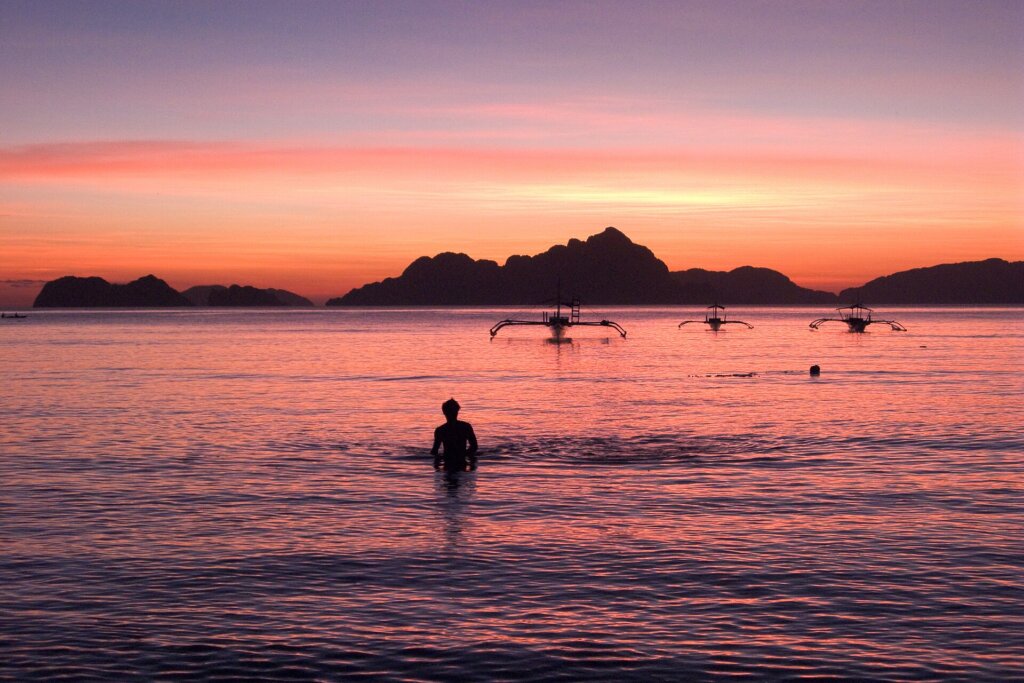
A few evening walks are genuinely worth doing on foot. The stretch along the town beachfront at dusk, when the limestone cliffs of Taraw turn orange and boats return from island hopping, is one of the best free experiences in El Nido. A loop through the market lanes and Calle Hama around 7 pm shows the town at its most social, with grilled seafood stalls, families out for the evening and live acoustic music. Short walks on Marimegmeg or Corong-Corong beach just after sunset are lovely too, as long as you arrange a ride back rather than tackling the dark road.
Finally, respect the community you are walking through. Many lanes are residential, so keep your voice down late at night, avoid shining lights into homes and do not linger outside houses or schools. Locals appreciate visitors who greet them with a simple “magandang gabi” (good evening).
What to Pack for Night Walks
- Headlamp or compact torch with spare batteries
- Closed sandals with grippy soles
- Insect repellent for dusk
- Small crossbody bag that zips closed
- Power bank for your phone
- Compact umbrella or poncho from June to November
- Printed or offline copy of your hotel’s address in English and Filipino
Key Takeaways
- Town proper is well lit and busy until roughly 10 to 11 pm.
- The road between town and Corong-Corong has dark, sidewalk-free stretches; use a tricycle at night.
- A headlamp and grippy sandals prevent the most common injuries from drains and uneven surfaces.
- Brownouts can plunge streets into darkness instantly, so always carry a light.
- After drinking or after midnight, take a tricycle even for short distances.
- Save your hotel address offline and keep valuables in the room safe.
Frequently Asked Questions
Is El Nido safe at night for tourists?
Generally yes. Violent crime against tourists is uncommon. The main night risks are uneven roads, open drains, traffic, dogs and petty theft, all manageable with basic precautions.
Can I walk from El Nido town to Corong-Corong at night?
It is possible but not ideal. Parts of the road have no sidewalk and little lighting. A tricycle is cheap and safer after dark.
Is El Nido safe for solo female travelers at night?
Many solo women report feeling comfortable in the lit town center. Stay on busy streets, avoid walking alone on dark roads late at night and share your plans with someone.
What should I bring when walking at night in El Nido?
A headlamp or torch, grippy closed sandals, repellent, a power bank, small cash and your hotel address saved offline.
What is the emergency number in El Nido?
The Philippine national emergency hotline is 911. Your hotel and the tourist police in town can also help.
About the Author
This guide was compiled by the El Nido Hotels Ranking editorial team, with input from local operators and ongoing on-the-ground updates.