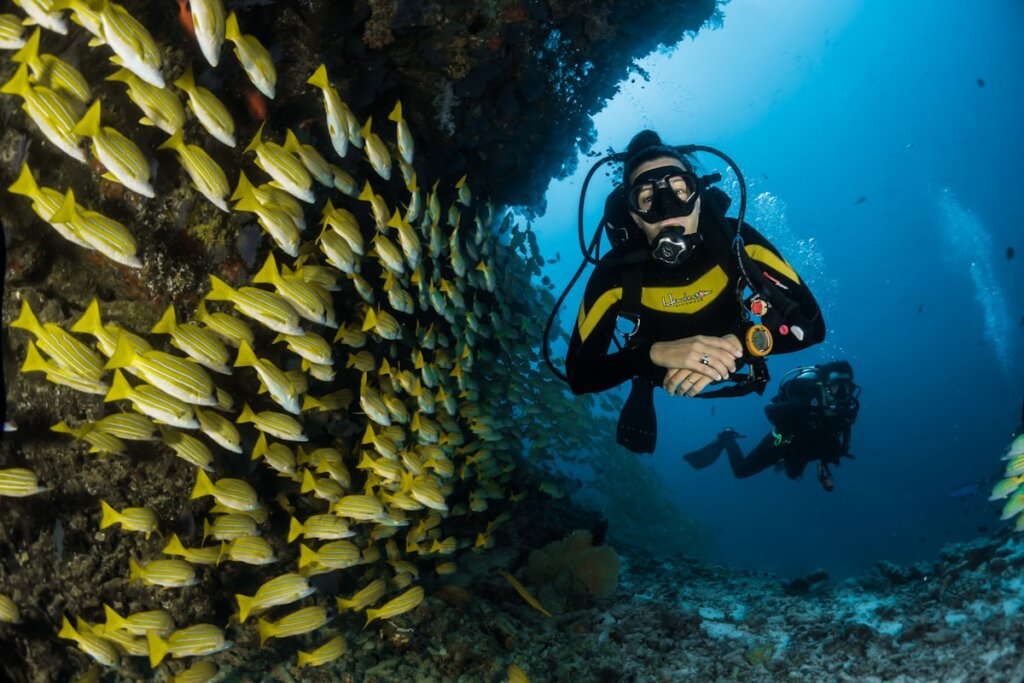

Once a year, on a handful of nights, many reef-building corals do something remarkable: they release bundles of eggs and sperm into the water at almost the same moment, filling the sea with drifting pink and white specks like an upside-down snowfall. It is called mass coral spawning, and it is one of the most extraordinary events in the ocean.
This guide focuses on coral spawning specifically for divers, snorkelers and nature-minded travelers planning El Nido trips who want to understand when reefs reproduce, whether you can realistically see it, and how your visit can help reefs recover. It is a seasonal and conservation guide, not a promise of a sighting — and we will be clear about what is known and what is not.
Here is the honest headline: spawning in El Nido’s reefs has not been widely documented in public research, so nobody can give you an exact date. What we can do is explain the science, the general timing observed elsewhere in the Philippines, and how to plan if you want the best chance.
What Coral Spawning Is
Corals are animals. Many reef-building species reproduce sexually by “broadcast spawning”: colonies release gamete bundles that float to the surface, break apart and fertilize in open water. The resulting larvae drift for days to weeks before settling on hard surfaces and starting new colonies.
The synchrony is what makes it spectacular. Corals across a reef — sometimes multiple species — release on the same nights, often within the same hour. Scientists link this timing to a combination of cues:
- Water temperature: rising sea temperatures during the warm season help set the month.
- The lunar cycle: spawning commonly occurs a few nights after a full moon.
- Sunset timing: release often happens in the hours after dark.
For a concise scientific overview of coral biology and reproduction, see Wikipedia’s coral article, which links to the primary literature.
When Spawning Might Happen Around El Nido
Timing varies by region, latitude and species. On Australia’s Great Barrier Reef, mass spawning famously happens around October to December. In the Philippines, research groups such as the University of the Philippines Marine Science Institute have studied coral reproduction at sites in the north of the country, where spawning of several common species has been observed mainly in the warmer spring months, roughly March to May.
Whether El Nido’s reefs follow the same window is not well documented publicly. Palawan’s waters warm through the dry season, and the general Philippine pattern suggests spring as the most likely period, but individual species and sites can differ. Treat the table below as a planning guide for reef-related experiences, not a spawning timetable.
| Period | Reef event or condition | Confidence | What it means for visitors |
|---|---|---|---|
| March–May | Possible coral spawning nights, based on wider Philippine observations | Low to moderate for El Nido specifically | Ask dive shops about night dives a few days after the full moon |
| April–June | Warmest water; higher bleaching risk during heat waves | Moderate | Be extra careful not to touch or stress corals |
| November–May | Calmer seas and generally better visibility | Moderate to high | Best overall window for diving and snorkeling |
| June–October | Southwest monsoon, more rain and runoff, lower visibility at times | High | Fewer dive days; plan flexible schedules |
| Year-round | Bioluminescent plankton on dark nights | Variable | Night swims and tours can still show glowing water |
For water conditions by month, see our water temperature guide and best time to dive in El Nido.
Can You Actually See It? Realistic Expectations
Even in places where spawning dates are well predicted, researchers sometimes wait night after night and miss it. In El Nido, where timing is uncertain, a sighting is a stroke of luck rather than something you can book.
- It happens at night. You will need a night dive or night snorkel with a qualified guide.
- It can be brief. A species may release for under an hour on a single night.
- Not every coral spawns the same way. Some species brood larvae internally instead of broadcast spawning.
- Dive shops may not run dedicated spawning trips. But if you dive with a local shop in spring, ask whether their instructors have seen spawning and when.
If you do not see it, a night dive is still rewarding: hunting octopus, sleeping parrotfish in mucus cocoons, and glowing plankton when you wave your hand. Our bioluminescence night tour guide covers non-diving options.
What Spawning Looks Like Underwater
Divers who have witnessed spawning often describe a slow build-up. First, some colonies “set”: small bundles become visible in the mouths of the polyps, giving the coral a speckled, pimpled look. Then, sometimes with no obvious trigger, the bundles lift off and float upward. Under a torch beam, the water column fills with drifting beads — commonly pink, orange, cream or white depending on the species. Brain corals, branching corals and plate corals may release on different nights or at different times on the same night. Other animals join in too: some sponges, giant clams and sea cucumbers are known to spawn in the same season, and fish sometimes gather to feed on the bounty.
Snorkelers and the Morning-After Slick
If spawning happens, the floating gametes can collect at the surface overnight and form pinkish slicks visible the next morning, especially in calm bays. Snorkelers and boat passengers occasionally spot these without realizing what they are. If you see an unusual pink or tan film on the water in spring, mention it to your dive shop — it may be a sign that spawning has started, and it can help them plan the next night’s dive.
How to Plan a Spring Night Dive in El Nido
- Check the moon calendar. Note the full moon dates in March, April and May during your trip.
- Book a few nights after the full moon. Spawning in many regions occurs roughly three to seven nights after the full moon, though this varies.
- Choose an experienced shop. Read our El Nido scuba diving guide for operators and dive sites. Make sure you are comfortable with night diving conditions.
- Bring a good torch with a red-light mode. Red light disturbs marine life less. If spawning starts, dim or turn off lights so you do not confuse the animals.
- Stay flexible. Pencil in two or three possible nights rather than one.
- Avoid contact. Gamete bundles are fragile. Keep perfect buoyancy and never touch corals.
Why Spawning Matters More Than Ever
Coral spawning is how reefs replenish themselves. After damage from storms, bleaching or human impact, new larvae settling on the reef are the main way it recovers naturally. That process depends on healthy adult colonies being alive and stress-free enough to reproduce.
Reefs worldwide have been under severe heat stress in recent years. In April 2024, the US National Oceanic and Atmospheric Administration confirmed a fourth global coral bleaching event, and its Coral Reef Watch program tracks heat stress across the Philippines and elsewhere. Bleached corals often skip or reduce spawning, which slows recovery. This is why protecting reefs during your visit is not abstract — it directly affects whether the next generation of coral appears.
Local restoration efforts also help. If you want hands-on involvement, our coral gardening guide explains volunteer and restoration programs in the area.
How Visitors Can Support Reef Reproduction
- Never stand on or touch coral. Even light contact damages tissue.
- Use mineral, reef-friendly sunscreen or cover up with a rash guard. See our reef-safe sunscreen guide.
- Do not take coral, shells or sand. It is illegal in protected areas. Our guide on shell and coral souvenir rules explains why.
- Choose operators that anchor responsibly and use mooring buoys where available.
- Cut plastic waste. Debris smothers and abrades reefs.
- Report bleaching sightings to your dive shop; many contribute observations to monitoring programs.
These habits matter year-round, but especially in the warm months when corals are both most stressed and most likely to be preparing to spawn.
The Bottom Line
Coral spawning in El Nido is real biology with uncertain local timing. If you visit in spring and dive at night a few days after the full moon, you give yourself a small but genuine chance of witnessing it. Even without a sighting, understanding spawning changes how you see the reef: every colony you avoid touching is a potential parent of the next reef. Plan for calm, clear-water months, dive with a responsible operator, and let the possibility of a coral “snowstorm” be a bonus rather than the goal.
Frequently Asked Questions
When does coral spawning happen in El Nido?
Exact dates for El Nido are not well documented. Observations elsewhere in the Philippines point to the warmer spring months, roughly March to May, typically a few nights after a full moon.
Can tourists see coral spawning in El Nido?
Possibly, but it requires luck. Spawning happens at night, can last less than an hour, and local timing is uncertain. A spring night dive a few days after the full moon gives the best chance.
Do I need to be a certified diver to see spawning?
Most sightings happen on night dives, so you would normally need certification and night-dive experience. Snorkelers may occasionally see gamete slicks at the surface the morning after.
Does coral bleaching affect spawning?
Yes. Heat-stressed or bleached corals often reproduce less or skip spawning, which slows reef recovery. That is why reducing stress on reefs matters.
What is the best month to dive in El Nido overall?
The northeast monsoon months, roughly November to May, generally offer calmer seas and better visibility, with spring overlapping the possible spawning window.
How can I help El Nido reefs as a visitor?
Never touch coral, use reef-friendly sunscreen or rash guards, do not take shells or coral, choose responsible operators and reduce plastic waste.