Few things feel as magical as waving a hand through dark water and watching it spark blue-green. This guide focuses on bioluminescent plankton specifically for night-owl travelers who are already staying in El Nido and want one memorable evening beyond the usual island tours. It is a niche experience with honest limits: the glow is a natural bloom, not a scheduled attraction, so we cover the conditions that raise your odds, the safest ways to swim at night, and good backup plans if the water stays dark.
- What Is Bioluminescence and Why Does It Happen in Palawan?
- Best Time of Year and Moon Phase for Glowing Water
- Where to Look Around El Nido
- How to Do a Night Swim or Night Kayak Safely
- Tour Options Versus Going on Your Own
- Photographing Glowing Water
- Backup Plans if the Water Stays Dark
- Responsible Glow-Swimming Checklist
- Frequently Asked Questions
What Is Bioluminescence and Why Does It Happen in Palawan?
Bioluminescence is light produced by living organisms. In tropical coastal water the usual source is single-celled plankton, mainly dinoflagellates, that flash a cold blue-green light when the water around them is disturbed. A paddle stroke, a swimmer’s kick, or a wave breaking on the shore is enough to trigger it. The light is a defence reflex rather than a constant glow, which is why the effect looks like sparks that follow your movement.
Palawan’s warm, sheltered bays, mangrove edges and nutrient-rich inlets provide the kind of conditions where plankton can multiply. Dinoflagellate numbers rise and fall with temperature, rainfall run-off, wind and tides, so the same bay can sparkle strongly one week and look completely ordinary the next. Anyone promising a guaranteed glow is overselling. Treat it as a bonus, and plan the evening so it is still enjoyable without it.
Marine scientists generally describe bioluminescence as visible only in true darkness, and the NOAA Ocean Service explainer on bioluminescence is a good primer if you want the science before you go. The short version for travelers: dark skies, calm water and patience matter more than any single location.
Best Time of Year and Moon Phase for Glowing Water
Two calendars matter: the moon and the season. Moon phase is the one you can control. Plan around the new moon, ideally the three or four nights either side, when the sky is darkest. A full moon floods the bay with light and washes out the faint glow, so avoid those nights even if the weather looks perfect.
For season, the drier months from roughly December to May bring calmer seas and clearer nights, which makes night boating safer and visibility better. The wetter months can bring heavy run-off that feeds plankton, but also squalls, murky water and cancelled boat departures. Check current forecasts with the PAGASA weather service and read our October conditions guide if you are travelling in the shoulder season.
| Condition | Better odds | Poor odds |
|---|---|---|
| Moon phase | New moon +/- 3 nights | Full moon and the nights around it |
| Sea state | Flat, glassy bay | Choppy water, strong wind |
| Sky | Clear and dark | Heavy cloud with town light glare |
| Water clarity | Calm, slightly warm | Fresh run-off after storms |
| Time of night | 90 minutes after sunset onward | Dusk or twilight |
If your dates are fixed and fall on a full moon, do not cancel the idea, but lower your expectations and book something flexible rather than a prepaid package.
Where to Look Around El Nido
There is no official glow-swim site in El Nido, so the honest answer is to start with sheltered, dark, low-wind water away from bright resort lighting. Three kinds of place tend to work best.
Sheltered Bays on the Bacuit Archipelago
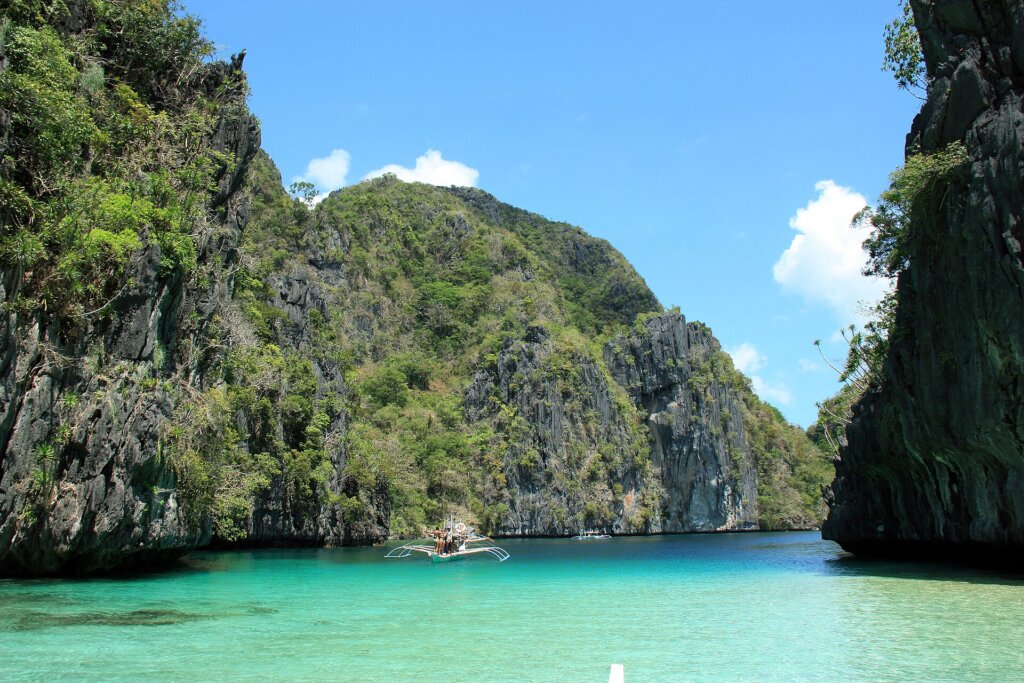
The calm lagoons and coves inside the archipelago keep the surface flat on quiet nights. Some local boat operators offer sunset-to-dusk trips or night kayaking in these areas. Ask your hotel or a licensed operator whether anyone has seen a glow in the past few nights; recent sightings are the best predictor.
Quiet Stretches of Beach Away from Town
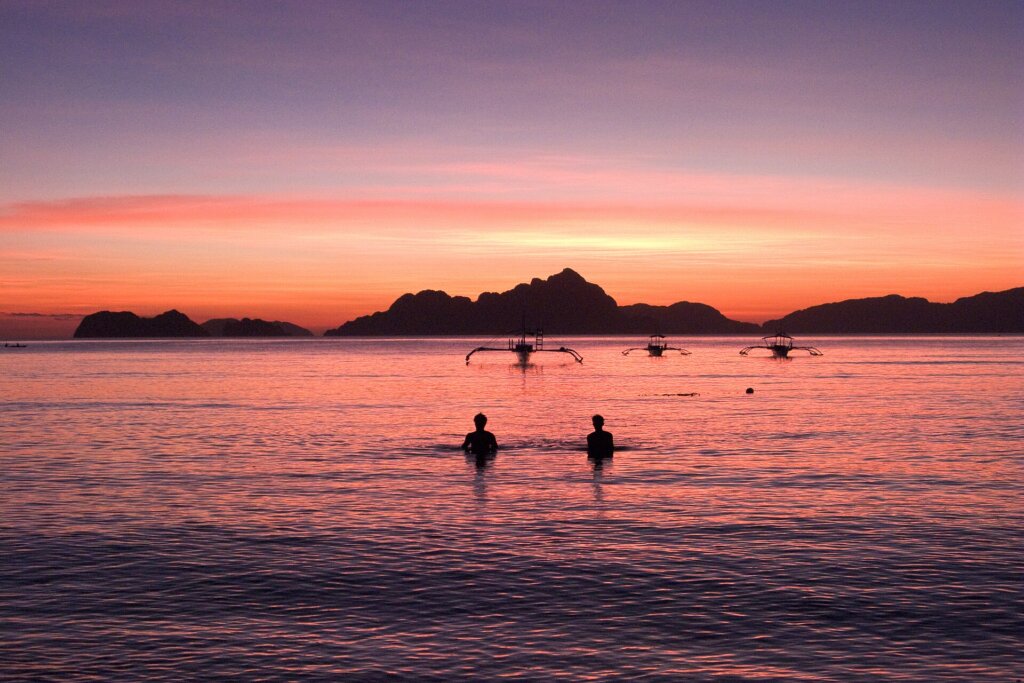
Beaches without street lights let your eyes adjust fully. Walking the waterline and kicking the shallows can reveal a faint glow even when nothing shows up in deeper water. Combine this with our sunset spots guide so you arrive early, enjoy the colours, then wait for full darkness.
Mangrove-Fringed Inlets
Mangrove edges are classic plankton habitat, but they are also home to insects and uneven footing. If you head there, wear repellent and read our notes on sandflies and insect bites first. Go with a local guide rather than exploring alone.
How to Do a Night Swim or Night Kayak Safely
Darkness changes the risk level of ordinary water activities, so treat this as a supervised evening rather than a casual dip. Use these rules whenever you go.
- Go with a licensed local operator or experienced guide who knows the bay and carries lights, a whistle and a first-aid kit.
- Never swim alone and keep the group together; one person should stay on the boat or shore as a spotter.
- Wear a life vest even if you swim well. Night disorientation and cold muscles are real.
- Keep a waterproof torch with a red or dim mode, and use it only for safety so your eyes stay dark-adapted.
- Avoid alcohol before getting in the water.
- Stay away from boat channels, reefs with sharp coral and areas with known jellyfish. Ask the crew about recent sightings.
- Skip sunscreen and insect repellent on your skin if you plan to swim, or apply them well before, because chemicals harm reef life and dull the water.
Sea conditions can change quickly at night. If the crew says no, accept it. Our seasickness tips for boat tours also help if a small boat in the dark makes you queasy.
Tour Options Versus Going on Your Own
Because the phenomenon is unpredictable, the right booking style matters. Here is a comparison of the main approaches.
| Option | Best for | Typical trade-off | Flexibility |
|---|---|---|---|
| Night kayak with a guide | Active travelers and photographers | Needs basic paddling fitness; limited range | Medium, can usually reschedule for weather |
| Private boat after sunset | Couples and small groups | Higher cost than a shared trip, see our private boat charter guide | High, you choose the bay and time |
| Shore walk from your hotel | Budget travelers | Lowest odds of a strong glow | Very high, free and spontaneous |
| Combined sunset and stargazing trip | Families and first-timers | Glow is a bonus, not the main event | Medium |
Always confirm what is included, whether life vests are provided, the cancellation policy for bad weather, and what happens if no glow appears. A fair operator will offer a reschedule or partial refund for a dark-water night.
Photographing Glowing Water
Bioluminescence is hard to photograph because the light is faint and brief. Phones struggle; a camera with manual controls and a tripod does far better. Use a wide aperture, a long exposure of several seconds, and a high but not extreme ISO. Frame the shot so a hand, paddle or wave is moving through the water when the shutter is open.
Keep your screen brightness low and your torch off during the exposure. Protect equipment from salt spray with a dry bag, and do not hold expensive gear over open water without a strap. If you are flying a drone, check local limits first with our drone photography rules because night flights are rarely allowed or wise.
Remember that the best memory may be the one without a lens. Put the camera down for a few minutes and simply watch the water spark around your fingers.
Backup Plans if the Water Stays Dark
Some nights nothing glows. Decide on a Plan B before you leave so the evening still feels worthwhile. Stargazing is the obvious replacement, since the same darkness that helps plankton also reveals a rich sky away from town lights. Pair it with a beach dinner, a quiet kayak paddle or a slow walk along the shore.
You can also swap the plan for another night when the moon is darker, or fill the evening using ideas from our indoor and rainy day activities guide if the weather turns. If you are comparing dive options for the next morning, our El Nido scuba diving guide covers sites and operators.
For wider context on responsible visits to Palawan’s protected seascape, the UNESCO World Heritage tentative lists and the Department of Environment and Natural Resources publish conservation background, and the Philippine Department of Tourism lists current travel advisories.
Responsible Glow-Swimming Checklist
Plankton blooms are fragile, and the water they live in is shared with fishers, turtles and reef life. Keep the experience low impact by following a few habits: carry out all rubbish, use reef-safe products or none, avoid touching marine life, keep boat engines idle near the glow, and tip crew fairly (see the El Nido tipping guide).
Pack a small kit: a dry bag, a light layer for the boat ride back, a headlamp with red mode, water, a power bank, and a waterproof phone pouch. Tell your hotel where you are going and when you expect to return. With flexible expectations and good timing, a dark night in El Nido can turn into one of the trip’s most memorable moments.
Frequently Asked Questions
Is bioluminescence guaranteed in El Nido?
No. It depends on plankton blooms, which vary with weather, water temperature and run-off. Treat it as a possible bonus and choose flexible bookings.
What is the best moon phase?
Around the new moon, when the sky is darkest. A full moon makes the glow much harder to see.
Is it safe to swim at night?
It can be, with a licensed guide, life vest, a spotter and calm conditions. Never swim alone, and skip alcohol before the water.
Do I need special equipment?
Not to see it. For photos, bring a camera with manual exposure, a tripod and a dry bag. A dim red torch protects your night vision.
Can children join a glow-swim evening?
Older children who swim confidently and wear life vests can join supervised trips. For younger kids, a shoreline walk in shallow water is gentler.
What if nothing glows?
Switch to stargazing, a beach dinner or a rebooked night closer to the new moon. A fair operator will reschedule or refund for a dark night.