TL;DR: If it has been more than 6–12 months since your last dive, book a refresher with an El Nido dive shop before your first fun dive — it usually takes half a day, starts in shallow water, and makes the Bacuit Bay reef dives far more enjoyable and safe.
This guide focuses on dive refreshers specifically for certified divers who have not been underwater for a while and are planning to dive in El Nido. If you are a total beginner, start with our comparison of PADI vs SSI Open Water in El Nido instead. Here we cover what a refresher actually involves, how to decide whether you need one, how the main agency programmes differ, and which kinds of Bacuit Bay dive sites are gentle enough for your first dive back.
The unique angle: most guides treat a refresher as a box to tick. In El Nido, where boat entries, current at some sites and limestone walls are common, a well-run refresher is the difference between spending your first dive fiddling with your buoyancy and actually seeing the turtles, nudibranchs and schooling fish that make Bacuit Bay special.
What Is a Dive Refresher?
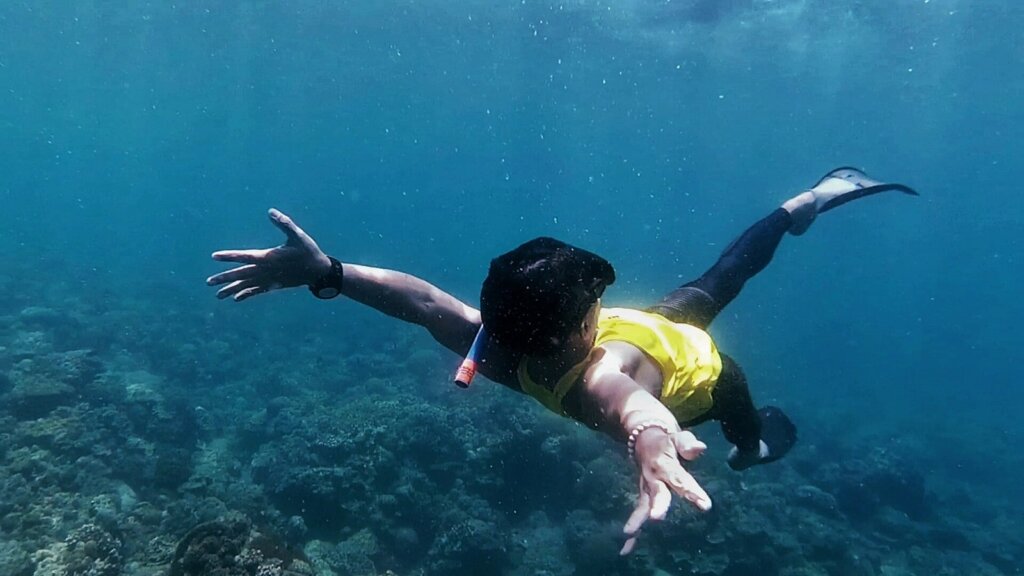
A dive refresher is a short, instructor-led session that reviews the core skills you learned in your entry-level course. It is not a new certification level; it simply rebuilds confidence and muscle memory. A typical El Nido refresher includes a short theory recap, an equipment set-up review, and a confined-water or shallow-reef session where you practise key skills before an optional guided dive.
Skills usually revisited include: assembling and checking your kit, pre-dive safety checks with a buddy, regulator recovery and clearing, mask clearing and removal, sharing air from an alternate air source, controlled descents and ascents, and neutral buoyancy. Many shops in El Nido run the skills portion just off a beach or in calm, shallow water near a resort rather than in a swimming pool, which has the bonus of putting you straight into the real environment you will be diving in.
Do You Need One? A Simple Time-Gap Test
Dive agencies and dive shops generally recommend a refresher if you have not dived in roughly six to twelve months, but the real answer depends on your experience. Use this quick self-check:
- Fewer than 20 logged dives and more than 6 months since your last dive: book a refresher.
- More than 20 dives but over 12 months out of the water: a refresher is strongly recommended.
- Experienced diver, over 2 years out: do at least a skills review, even if you feel confident.
- Recently dived but in very different conditions (cold lake, shore diving only, no boat entries): consider a guided easy first dive with a skills check.
Many El Nido shops will ask when you last dived and how many dives you have logged. If your answers suggest you are rusty, they may insist on a refresher before taking you to deeper or current-prone sites. That is a good sign of a responsible operator, not an upsell. You can compare operators in our best dive shops in El Nido roundup.
Refresher Options Compared
The main agencies each have their own name for a refresher. The format is similar, but the paperwork and what you receive at the end differ slightly.
| Option | Typical format | What you get | Best for |
|---|---|---|---|
| PADI ReActivate | Online knowledge review plus in-water skills session with an instructor | A replacement certification card showing the ReActivate date | PADI-certified divers who want an updated card |
| SSI Scuba Skills Update | Short theory recap and confined-water skills session | Recorded in your SSI digital profile | SSI-certified divers using the MySSI app |
| Shop “scuba review” or skills check | Informal skills session, often combined with a shallow first dive | Instructor sign-off in your logbook | Divers who just want confidence, not a new card |
| Guided easy first dive (no formal review) | Shallow reef dive with a guide watching closely | A logged dive | Experienced divers with a short gap |
| Retake entry-level course | Full multi-day course | New certification | Divers out of the water for many years who feel lost |
You can read the official programme details on the PADI ReActivate page and on SSI’s official site. Prices vary by shop, group size and whether a dive is included, so ask for a written quote that lists equipment rental, boat fees and the environmental fee.
How a Refresher Day in El Nido Usually Runs
Most refreshers are scheduled for the morning so you can continue to a guided reef dive the same day. A typical sequence looks like this:
- Paperwork and medical form. You will complete a diver medical questionnaire. If you answer “yes” to certain conditions, you may need a doctor’s sign-off before diving, so read the form before you travel and bring a signed medical statement if needed.
- Theory recap. A short chat or e-learning review covering pressure, ascent rates, safety stops, hand signals and no-decompression limits.
- Kit assembly. You set up your own BCD, regulator and tank under supervision, then do a buddy check.
- Shallow skills session. In calm, standing-depth water you practise regulator and mask skills, air-sharing and buoyancy until they feel natural again.
- First dive back. If the instructor is happy, you continue to a shallow, sheltered reef dive and log it.
Arrive rested, hydrated and without a hangover. If you get seasick on boats, read our seasickness remedies guide before your dive day, because a queasy stomach makes every skill harder.
Best Bacuit Bay Sites for Your First Dive Back
El Nido’s dive sites sit mostly around the islands of Bacuit Bay. Conditions change with season and tide, and your dive shop will pick sites on the day, but rusty divers are usually taken to sheltered, shallow-to-moderate reefs rather than deeper walls or channels. Typical characteristics of a good refresher site include:
- A sandy or gently sloping bottom in the 5–12 metre range, so you can settle and correct buoyancy without stress.
- Protection from wind and swell on the lee side of an island.
- Little or no current.
- Plenty of life to keep the dive rewarding: hard and soft corals, reef fish, and sometimes turtles.
Sites with swim-throughs or tunnels, deeper pinnacles, and channels that can run with current are better saved for later dives once your buoyancy and air consumption have settled. Ask your guide to explain why they chose a site; good operators are happy to talk you through the plan. For a non-diving look at the same reefs, our El Nido snorkeling guide covers the shallow spots.
Gear, Health and Safety Tips
Bring your own mask if you have one that fits well — a leaking rental mask is one of the most common reasons rusty divers struggle. A thin rash guard or 3 mm shorty is usually enough in Bacuit Bay’s warm water, and sun protection matters on the boat between dives; see our reef-safe sunscreen guide.
Plan your flights carefully. General dive-safety guidance from organisations such as Divers Alert Network (DAN) recommends waiting at least 12 hours before flying after a single no-decompression dive and longer — typically 18 hours — after multiple dives or multiple days of diving. Schedule your refresher and fun dives early in your stay, not on the day before you fly out of El Nido.
Finally, make sure your travel insurance covers recreational scuba diving to the depths you plan to dive. Some standard policies exclude diving or limit depth. Our El Nido health and medical guide covers clinics and what to do if something goes wrong.
Questions to Ask Before You Book
- Is the person running my refresher a certified instructor, not just a divemaster?
- What is the maximum student-to-instructor ratio for the skills session?
- Where is the skills session held — pool, beach or shallow reef?
- Does the price include equipment, the boat, the dive guide and the environmental fee?
- Will I receive a new card, an app record or a logbook signature?
- What happens if weather cancels the boat — reschedule or refund?
Asking these questions up front helps you compare quotes fairly and avoids surprises on the day. You can also check the Philippine Department of Tourism site for general travel information before you go.
Key Takeaways
- Book a refresher if it has been more than 6–12 months since your last dive, especially with fewer than 20 logged dives.
- PADI ReActivate and SSI Scuba Skills Update are formal options; a shop scuba review is a lighter alternative.
- Expect half a day: paperwork, theory recap, kit assembly, shallow skills and a sheltered first dive.
- Bring a well-fitting mask and plan at least 12–18 hours between your last dive and your flight.
- Get a written quote listing gear, boat and environmental fees, and confirm your insurance covers diving.
Frequently Asked Questions
How long does a dive refresher take in El Nido?
Most refreshers take around half a day, including paperwork, a theory recap, a shallow skills session and often one guided reef dive afterwards.
Do I need a refresher if I have my certification card?
Your card does not expire, but most shops recommend a refresher if you have not dived for 6–12 months or longer, and some will require one before taking you to deeper sites.
Is PADI ReActivate different from a regular scuba review?
PADI ReActivate is a formal programme that issues a replacement card showing your refresher date. A shop scuba review is less formal and is usually recorded only in your logbook.
Can I fly the day after a refresher dive?
General dive-safety guidance suggests waiting at least 12 hours after a single no-decompression dive and around 18 hours after multiple dives. Avoid diving on the day before your flight.
Which El Nido dive sites are best for rusty divers?
Dive shops usually choose sheltered, shallow-to-moderate reefs in Bacuit Bay with little current for refresher dives, saving tunnels, pinnacles and channels for later in your trip.
About the Author
This guide was compiled by the El Nido Hotels Ranking editorial team, with input from local operators and ongoing on-the-ground updates.