On a typical island-hopping day you meet three or four people who make the trip work, yet most guests could not say who does what. This guide focuses on boat crew roles specifically for first-time visitors in El Nido who want to know who to ask about the route, who prepares lunch, who watches the water, and how to say thank you fairly. It includes a comparison table, practical questions and etiquette notes.
The Typical Crew on a Shared Bangka Tour
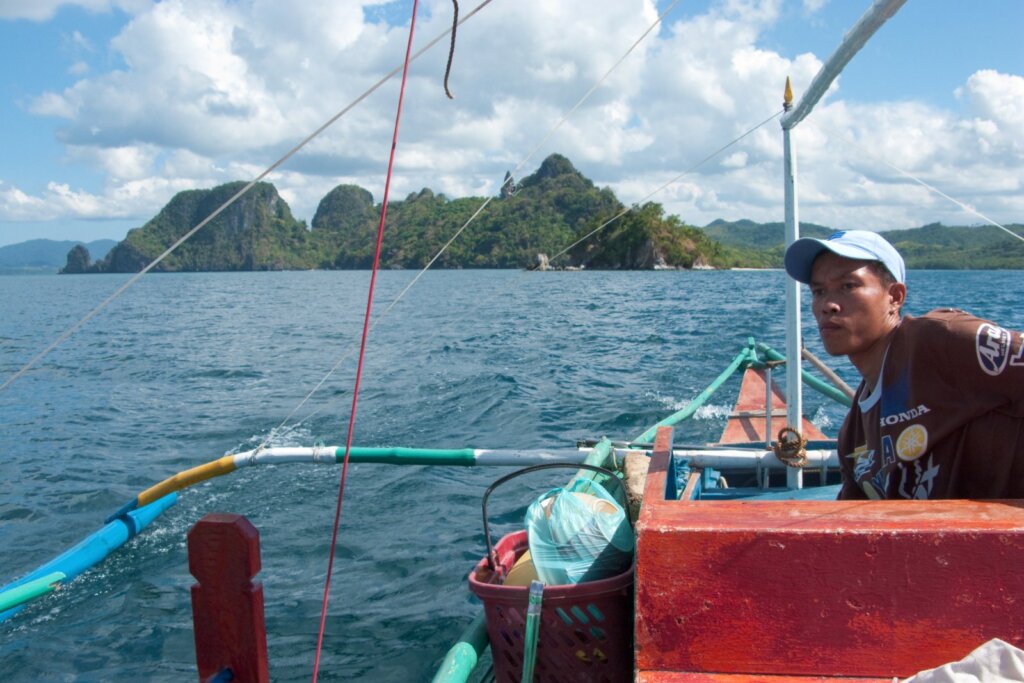
Shared tours in Bacuit Bay run on traditional outrigger boats with a small crew. Larger boats may have three to five people, while smaller private boats may have two. Responsibilities overlap, and everyone helps with anchoring, loading and cleanup, but the core roles are consistent enough to understand before you board. Knowing who does what helps you direct questions to the right person and avoids frustration if one crew member is busy.
For the wider picture of how to behave on board, see our island hopping boat etiquette guide.
How crews are organized
Many boats are family-run, with a captain who owns the boat, relatives working as deckhands or cooks, and a hired guide on busy days. Operators in town coordinate bookings, but the day itself belongs to the people on the boat. Treat them as hosts rather than service staff, and you will usually receive a warmer, more flexible day. Crew members often start before sunrise preparing food, fuel and gear, and finish after dark washing the boat and restocking supplies.
A day on the water can last eight hours or more, and the crew may complete several trips each week with little rest. This is one reason a fair tip matters.
Captain vs Guide vs Cook: Comparison Table
The roles below describe the usual arrangement. Smaller crews may combine roles, so treat the table as a general guide.
| Role | Main responsibility | Ask them about | Do not ask them to |
|---|---|---|---|
| Captain | Navigation, engine, weather decisions | Route changes, sea conditions | Override safety decisions |
| Guide | Briefing, swimming safety, stops | Snorkeling spots, lagoon rules, photos | Cook or steer |
| Cook | Grilling and serving lunch | Dietary needs, allergies, drinks | Serve food earlier than it is ready |
| Deckhand | Ropes, anchor, boarding help | Where to store bags | Carry heavy luggage up the beach |
On small boats, the guide may also help with cooking, and the captain may handle anchoring. If you are unsure, ask who is in charge of the group for the day.
For visitor information on the destination and licensed tour practices, the Department of Tourism Palawan page is a good starting point. Always confirm that your operator is registered, keep your booking confirmation on your phone, and ask the crew to introduce themselves at the start of the day so that you know whom to approach if you have a question, a request or a concern during the trip.
When the roles are clear, the whole day runs more smoothly: the captain focuses on the sea, the guide on the guests, the cook on the meal, and you on enjoying the lagoons.
What the Captain Does
The captain controls the boat, manages the anchor, reads the weather and decides when to change course. Their decisions about safety are final, and guests should treat them that way. They watch for squalls, shallow reefs, tides and other boats. Captains in El Nido usually know every cove and which stops are crowded at what hour.
If you worry about rough water, speak to the captain or guide politely before leaving the pier. They may suggest a more sheltered order of stops. Check forecasts yourself on PAGASA and see PAGASA wind signals explained to know when a cancellation is legitimate.
Understanding captain decisions
Captains weigh many things at once: wind direction, swell, tide levels at lagoon entrances, how many boats are already anchored and how much fuel remains. A decision to skip a stop may feel disappointing, but it usually reflects real conditions. If you disagree, ask for the reason and a possible alternative, such as visiting the stop at the end of the day. Never pressure a captain to take a risk for a photo. If a captain looks tired, intoxicated or dismissive of safety, contact the operator and change boats.
Captains also decide where to anchor in relation to coral. A good one will choose sand or rubble whenever possible. You can support this by following swimming instructions and not asking to anchor closer to a reef for convenience.
What the Guide Does
The guide acts as your host. They give the safety briefing, count passengers at each stop, help non-swimmers, point out fish and corals, and take photos if asked. A good guide knows when to visit a lagoon to avoid queues, and how to swap stops when one is full; read about this in lagoon closures and tour swaps.
Guides also remind guests of reef rules and the environmental policies for protected areas. You can read about broader conservation policy on the DENR website. Respect their instructions, particularly around fish feeding and touching corals.
How to get the best from your guide
Introduce yourself early and share what you care about, such as photography, calm swimming or avoiding crowds. Tell them if someone in your group is nervous in the water. Ask specific questions, like where turtles are sometimes seen or which snorkeling site is best for beginners. A friendly, curious guest tends to get more attention and more local insight.
Guide skills to look for
Strong guides count heads regularly, stay in the water with beginners, know first aid basics and speak clearly. They explain the order of the day, and they are honest about what is possible. Weak guides rush people, ignore children, or encourage risky jumping. If your guide is excellent, say so in your review and mention their name. It helps them get more work from the operator.
Remember also that your guide is not a photographer by default. If photos matter to you, say so at the start and offer a small extra tip.
What the Cook Does
The cook prepares the beach lunch, usually grilled fish, pork or chicken with rice and fruit. They shop in the morning, so tell the operator about dietary needs when you book. Vegetarian meals, shellfish allergies and halal requirements should be arranged in advance. Our guide to travel scams to avoid also explains how to confirm what your tour includes so there are no surprises.
The cook often works in the heat over charcoal, so be patient and friendly. Queue politely, take reasonable portions and carry your trash out. If you want extra drinks, ask what is available and pay in cash.
Allergy and diet communication
When you book, send a short message with the exact dietary need, for example “no shellfish” or “vegetarian, no fish sauce”. Repeat it to the guide at the pier and again at lunch. Do not rely on a general promise that the cook will accommodate you. For serious allergies, carry your own medication and consider bringing a backup meal. See waterproof gear and dry bags for ways to keep snacks and medicine dry on board.
Tipping: Who Gets What
Tips are not mandatory but are appreciated, because crew incomes depend on tourism and weather. Many travelers hand one tip to the guide at the end of the day and ask that it be shared among the crew, while others give separate amounts to each person. Cash in small bills works best. Our tipping guide and tipping etiquette guide give realistic ranges and tips for groups.
| Approach | How it works | Best for |
|---|---|---|
| One shared tip | Give to the guide, who splits it | Simple and fast |
| Separate tips | Hand each crew member directly | When roles are clearly distinct |
| Group collection | One person collects from everyone | Larger groups |
Keep a few small bills ready before the trip, because crews rarely have change on the boat. Tip at the end of the day rather than at the start, and do so discreetly and with a thank-you. If service was poor or unsafe, it is fine to tip less and send feedback to the operator instead.
Common Misunderstandings
Guests sometimes think the guide can change the weather plan, but the captain makes that call. Others expect the cook to prepare special dishes without notice, and some assume every boat uses the same route. Another common error is leaving the environmental fee receipt at the hotel. Keep your documents handy so the crew can show them at checkpoints. If something goes wrong, speak calmly to the guide first, then contact the operator after the trip.
Finally, remember that language can be a barrier. Most crew members speak enough English for the day, but a few polite Filipino phrases like “salamat” for thank you are always welcome. Learn the names of the captain and guide and use them. It turns a transaction into a pleasant shared day on the water.
Frequently Asked Questions
Who is in charge on an island hopping boat?
The captain has final authority over navigation and safety, while the guide leads the group activities.
Do I tip the captain and the cook too?
It is customary to tip the whole crew. You can give one amount to the guide to share or tip individually.
Can I request vegetarian food?
Yes, but arrange it when booking because the cook buys ingredients the same morning.
What should I do if I feel unsafe?
Tell the guide or captain right away and ask to change plans if needed.
Does the guide take photos?
Many guides will take a few photos for you, especially if you ask nicely. Do not expect professional work.
Is the crew the same for private and shared tours?
Private boats often have a smaller crew with combined roles, but the same safety responsibilities apply.