
Most travelers come to El Nido for the islands, but the food is a quiet pleasure that often surprises first-time visitors. Filipino cuisine layers Spanish, Chinese, Malay, and American influences into a flavor profile that swings between sour, salty, sweet, and umami. Palawan adds its own twist with seafood from pristine waters, mangrove-grown shellfish, and crocodile farms in the south.
This guide rounds up the must-try Filipino dishes you’ll find around El Nido, the Palawan-specific specialties worth seeking out, and where in town to eat — without naming specific restaurants whose prices and hours are likely to change. For an opinionated short list of restaurants, see our companion El Nido what-to-eat guide.
Classic Filipino dishes you’ll see on most menus
Adobo
Often called the Philippines’ national dish: chicken or pork braised in vinegar, soy sauce, garlic, peppercorns, and bay leaf. Every household has a recipe variation, so try it in more than one place.
Sinigang
A sour-savory broth built around tamarind, with pork, shrimp, or fish and vegetables like kangkong (water spinach) and labanos (radish). It’s the best dish on a hot afternoon — refreshing in a way you don’t expect from a soup.
Lechon
Whole roast pig with crackling, charcoal-roasted for hours. Traditionally a fiesta dish, but several El Nido restaurants offer it by the plate with the classic vinegar or liver-based dipping sauce.
Palawan-specific specialties
Kinilaw
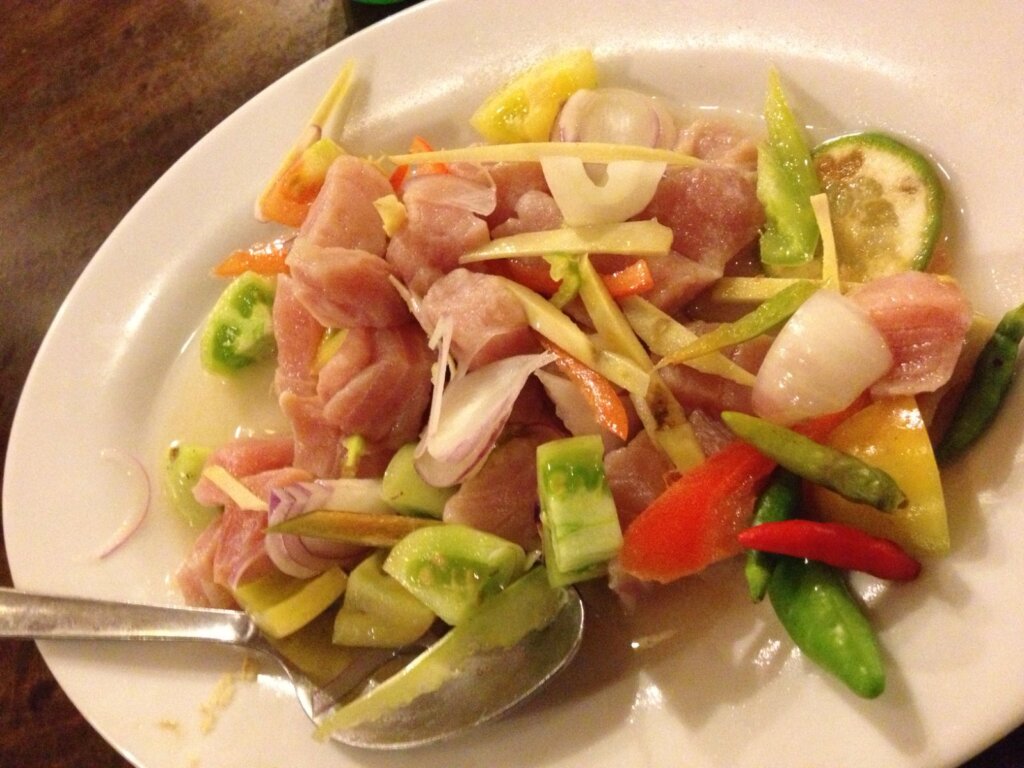
The Filipino cousin of ceviche: fresh fish (often tuna or tanigue) cured in vinegar and calamansi juice with onion, ginger, and chili. Palawan’s kinilaw stands out because of how fresh the catch is — many travel media lists rate it among the best in the country.
Tamilok (mangrove woodworm)
Despite the nickname, tamilok is not a worm — it’s a shipworm, a long bivalve mollusk that bores into mangrove wood. Traditionally served kinilaw-style, raw with vinegar, ginger, chili, and onion. The texture is creamy, the flavor briny like a strong oyster. It’s the most-talked-about specialty in Palawan.
Crocodile sisig
Palawan has a famous crocodile farm near Puerto Princesa, and farmed crocodile meat shows up on some menus, often prepared sisig-style — diced, seasoned with calamansi and chili, served sizzling. It’s farmed, not wild-caught. The texture is meatier than chicken, with a smoky finish on a hot plate.
Lato (sea grapes)
Known locally as lato, this bright-green grape-like seaweed pops in your mouth when you bite it, releasing a clean, salty flavor. Usually served as ensaladang lato — tossed with tomato, onion, and vinegar. A great refresher between heavy dishes.
Drinks and desserts
Halo-halo
The Philippines’ iconic dessert: shaved ice layered with red beans, jackfruit, coconut strips, jellies, ube ice cream, leche flan, and evaporated milk. “Halo-halo” means “mix-mix,” and that’s exactly how you eat it.
Buko juice & calamansi juice
Buko is fresh coconut sliced open at the table. Calamansi is a Philippine citrus (think small, intensely flavored kalamansi-lime hybrid); the juice, sweetened, is the perfect post-island-hopping rehydrator.
Must-try dishes at a glance
| Dish | Type | Flavor | Best for |
|---|---|---|---|
| Adobo | Main | Tangy, savory, garlicky | Comfort food, rice meals |
| Sinigang | Soup | Sour, savory | Hot afternoons |
| Lechon | Main | Crackling, rich | Group dinners |
| Kinilaw | Cold dish | Bright, citric, spicy | Starter, with beer |
| Tamilok | Specialty | Briny, creamy | Adventurous eaters |
| Crocodile sisig | Main | Smoky, chewy | Curiosity & beer |
| Lato salad | Side | Salty, popping | Cutting richness |
| Halo-halo | Dessert | Sweet, layered | Cooling down |
| Calamansi juice | Drink | Tart-sweet | Rehydration |
Where to eat in El Nido
- El Nido town center: the densest concentration of restaurants, bars, and cafés — from casual carinderias to rooftop bars.
- Lio Beach & Maremegmeg/Las Cabanas: resort-style dining run by the Ayala group, with sunset-view beach bars.
- Nacpan Beach: a few beach-shack restaurants set on the long stretch of sand 17 km north of town.
- Island hopping lunches: most Tour A/B/C/D operators serve a beach buffet of grilled fish, chicken, pork, rice, and fresh fruit; simple but freshly prepared.
- Budget eats: for cheap-and-cheerful options around town, see our El Nido cheap eats guide.
Practical tips before you order
- Water: tap water is not potable in El Nido — drink bottled.
- Portions: Filipino mains are generous and often shared family-style.
- Tipping: many restaurants add a 10–12% service charge; extra tip is optional.
- Vegetarian needs: most kitchens accommodate, but flag in advance — see the dedicated El Nido vegan/vegetarian guide.
- Allergies and raw food: kinilaw and tamilok are raw — skip them if you’re prone to stomach issues. Always flag shellfish and nut allergies.
- Prices and opening hours change frequently — check Google Maps or the restaurant directly before going.
Frequently asked questions
What is the must-try food in El Nido?
If you only try a few things: adobo (for the national dish experience), kinilaw (fresh local seafood), tamilok (the Palawan specialty), and halo-halo (the dessert). Round it out with calamansi juice after a day on the boat.
Is Filipino food spicy?
Not by default. Filipino cooking leans on sour and umami more than heat. Chili is offered on the side or as a sauce, so you can dial it up if you want.
Can vegetarians eat well in El Nido?
Yes, though most signature dishes are meat- or seafood-based. Town center has dedicated vegan and vegetarian options, and most kitchens can prepare a vegetable adobo or sinigang on request.
Is tamilok safe to eat?
Tamilok is a bivalve, not an insect, and is traditionally served raw kinilaw-style. It’s a long-standing local dish, but as with any raw seafood, sensitive stomachs may want to skip or ask for a cooked preparation.
Do El Nido restaurants take card?
Larger restaurants and hotels in town generally do, but smaller carinderias, beach lunches, and roadside stalls are cash-only. Keep Philippine pesos on hand.
Sources
- Travel Palawan — Must-Try Dishes in Palawan
- Big Dream Boatman — Palawan Food (Must try!)
- Bacon Is Magic — Iconic Food of Palawan
- Featured image: Pexels (CC0)