
After the island-hopping boats return and the beaches empty, the water around El Nido changes character, and a few travelers wonder whether they can dive or swim in it after dark. This guide focuses on night diving and night swimming specifically for certified divers and curious swimmers who want to know what is realistic, what is risky and what to ask before they go. We explain certification requirements, local conditions, the marine life that comes out at night and the safer alternatives for people who are not divers. If you are comparing daytime options first, start with our guide to macro diving in El Nido.
- Night Diving vs Night Swimming: Two Very Different Activities
- Who Can Join a Night Dive
- What You Can See After Dark
- Local Conditions and Safety Limits
- Safer Alternatives for Non-Divers
- How to Choose an Operator
- Gear Checklist for an Evening Dive
- Sample Evening Timeline
- Respecting the Reef After Dark
- Planning Your Evening
- Final Advice
- Frequently Asked Questions
Night Diving vs Night Swimming: Two Very Different Activities
The two activities are often confused, but they carry very different levels of risk. Night diving is a guided scuba activity that uses tanks, lights and a trained crew. Night swimming, by contrast, means getting into the sea after dark without equipment, and it is generally discouraged because of boat traffic, currents and low visibility.
Treat them as separate decisions. A certified diver with logged experience may reasonably join a supervised night dive with a dive center. A casual swimmer should stay in a lit hotel pool or join a guided evening activity such as a bioluminescence outing instead of swimming alone off a beach.
Who Can Join a Night Dive
Night dives typically require an Open Water certification at minimum, and many operators prefer or require an Advanced Open Water level or a recent logged dive count. Dive agencies such as PADI offer a night diver specialty that teaches light handling, communication with signals and navigation in the dark. If you hold a certification but have not dived in a while, expect to complete a refresher or a daytime check dive first.
Operators usually ask to see your certification card, ask about your last dive and may limit depth. Medical fitness matters too: do not fly within the recommended interval after diving, and check your own agency’s guidance. Beginners can still enjoy the sea in daylight through snorkeling or a discover scuba session, but a night dive is not a good first-time experience.
What You Can See After Dark
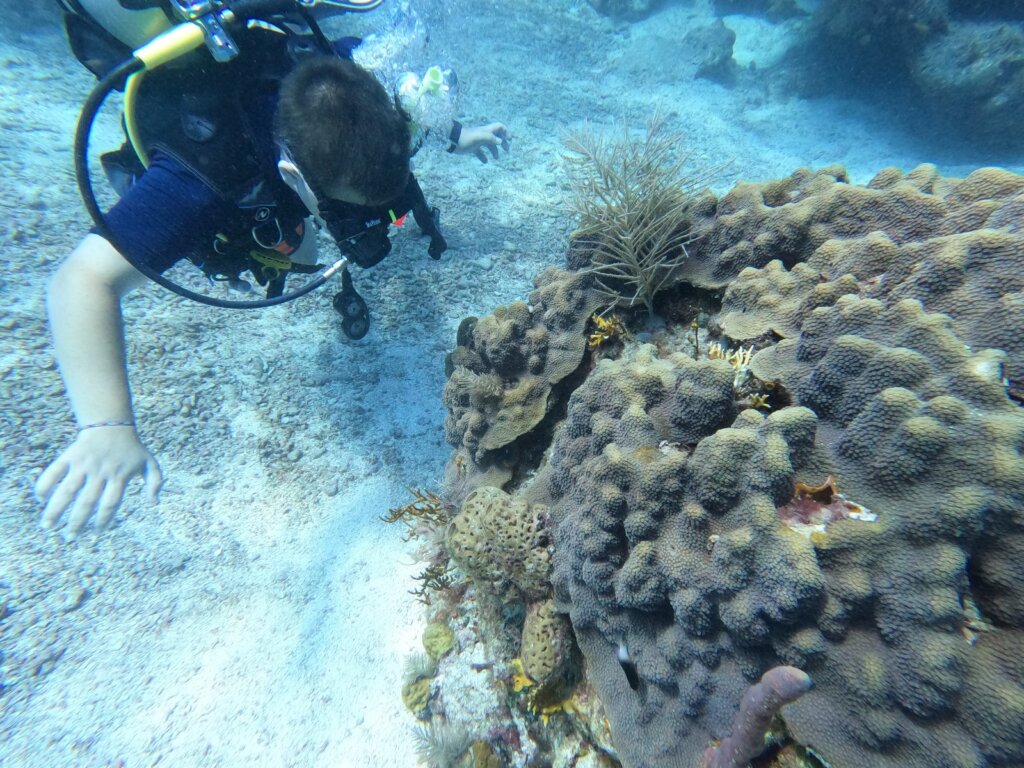
Many reef animals behave differently at night. Species that hide during the day, such as crustaceans and some mollusks, come out to feed. Sleeping fish tuck into crevices, and torch light reveals colors that disappear with depth during daytime. Bioluminescent plankton may also glow when disturbed, which is one reason a night dive can feel otherworldly.
| Marine life | Daytime behavior | At night |
|---|---|---|
| Crabs and shrimp | Hidden in crevices | Active and visible on the reef |
| Parrotfish | Feeding on algae | Often sleeping in a mucus cocoon |
| Octopus and squid | Mostly camouflaged | More active hunters |
| Plankton | Rarely noticed | May glow when disturbed |
| Sea turtles | Foraging or cruising | Resting on the reef or sand |
Torch etiquette
Shine your light on the substrate, not directly into animals’ eyes, and never touch or chase them. Sleeping fish can be stressed by repeated flashes, so photographers should use restraint.
Photography tips
A red filter or a dim setting on your torch can reduce disturbance. Keep buoyancy neutral so your fins do not stir sediment, which ruins visibility for the group.
Local Conditions and Safety Limits
El Nido sits in Bacuit Bay, where tidal currents and boat traffic vary by area. Dive centers choose sites with gentle conditions for night dives, but you should still expect lower visibility than in daylight and a narrower field of view in your torch beam. A guide will brief you on entry, exit, hand signals and what to do if you lose sight of the group.
Weather plays a major role. Squalls, swell and typhoon-related advisories can cancel dives at short notice, so follow forecasts from PAGASA and expect the operator to make the final call. Our typhoon season guide explains how this affects bookings.
Never swim alone at night from a beach or boat. Even strong swimmers can lose orientation, and boats navigating in the dark may not see a person in the water. If you want an after-dark water experience without scuba, choose a guided activity with life jackets and lights.
Safer Alternatives for Non-Divers
If you are not certified, there are several ways to enjoy the sea at night without risk. A guided bioluminescence tour uses small boats and calm shallow spots to see plankton glow, which is described in our bioluminescence night tour guide. A stargazing evening on the beach provides a quieter alternative; see the El Nido stargazing guide for the best viewing windows.
You can also swim in a hotel pool after sunset if it is lit and open. Properties with a sea-edge outlook make this especially pleasant; our notes on infinity pool hotels explain how to check pool hours and lighting before booking.
How to Choose an Operator
Quality varies, so evaluate operators carefully. Look for a dive center that is affiliated with a recognized training agency, uses well-maintained equipment and runs small groups with a dedicated guide. Ask how many divers per guide, what lighting is provided and whether there is a backup torch and surface marker for every diver.
Also ask about emergency procedures: oxygen on board, radio or phone contact, and the nearest medical facility. Marine conservation is part of the picture too, because the bay is a protected area managed with local authorities; the Department of Environment and Natural Resources publishes information on protected-area rules. Responsible operators brief divers on not touching coral and not collecting shells.
Gear Checklist for an Evening Dive
Even when the operator supplies equipment, a few personal items make the night smoother. Bring your certification card and logbook, a personal dive computer if you own one, and a small backup torch with fresh batteries. A signaling device such as a whistle or surface marker is often provided, but ask rather than assume.
Pack a rash guard or thin wetsuit even in warm weather, because long immersion and the breeze on the boat ride home can feel cool after sunset. Bring a dry bag for phones and wallets, a towel, and a light layer for the return trip. Leave jewelry at the hotel, and tell a friend or the front desk what time you expect to return.
Sample Evening Timeline
Operators set their own schedules, but a typical night dive evening follows a predictable rhythm, which helps you plan dinner and transport. Treat the times below as an illustration rather than a fixed schedule.
- Late afternoon: check-in at the dive center, paperwork and equipment fitting.
- Around sunset: boat departure and site briefing, including hand signals and maximum depth.
- Dusk: entry into the water and a slow descent as the reef changes from day to night shift.
- After dark: roughly 40 to 50 minutes underwater, depending on air consumption and conditions.
- Evening: surface interval on the boat, hot drink if offered, and return to the pier.
Respecting the Reef After Dark
The reefs of Bacuit Bay support the tourism economy, so protecting them is in every visitor’s interest. At night, divers sometimes become disoriented and brush the reef with a hand or fin, which can damage coral. Practice neutral buoyancy before you go, keep your gauges clipped close and avoid kneeling on the bottom for photos.
Do not feed fish, collect shells or take anything from the site. If you spot a turtle resting, keep your distance and your light low. Report anything unusual, such as fishing nets or debris, to the guide so it can be passed on to local authorities.
Planning Your Evening
A typical night dive departs late afternoon so the group can enter the water at dusk and complete the dive after dark. Allow time for a briefing, gear check and the boat ride back. Eat a light meal beforehand, stay hydrated and avoid alcohol before diving.
Book in advance, especially during peak months, and keep the schedule flexible for weather. Pair the experience with a rest day rather than stacking it after a long island-hopping tour; our comparison of Tour A vs Tour C shows how long each route keeps you out. Bring a dry layer, a towel and a waterproof bag because the ride back can be cool.
Final Advice
Night diving in El Nido can be memorable for certified divers who choose a reputable operator and respect the limits. For everyone else, guided evening activities and a lit pool offer a safer way to enjoy the night. Prioritize safety, confirm credentials and keep your plans flexible with the weather, and the water after dark can become the most atmospheric part of your trip.
Frequently Asked Questions
Can beginners do a night dive in El Nido?
Generally no. Most operators require at least an Open Water certification and some experience, and a night dive is not suitable as a first dive.
Is it safe to swim in the sea at night in El Nido?
Unsupervised night swimming is discouraged because of low visibility, currents and boat traffic. Use a lit pool or guided activity instead.
What marine life can I see on a night dive?
Crabs, shrimp, sleeping fish, octopus and sometimes glowing plankton are commonly seen on night reef dives.
Do I need my own torch?
Operators usually provide primary and backup lights, but confirm this when booking.
Can I fly after a night dive?
Follow your training agency’s guidance on surface intervals before flying and ask your operator for advice.
What is the best alternative if I am not a diver?
A guided bioluminescence tour or a stargazing evening on the beach are good non-diving options.