TL;DR: Pick El Nido for limestone lagoons and organized island-hopping that justify a flight to Palawan; pick Pagudpud if you want a drivable Ilocos road trip with wide white-sand beaches, windmills and heritage towns — no boats or flights required.
For travelers based in Metro Manila or elsewhere on Luzon, the beach-trip question often comes down to this: fly to Palawan for El Nido, or road-trip north to Pagudpud at the tip of Ilocos Norte? Both promise white sand and turquoise water, but they deliver very different trips.
This guide focuses on El Nido vs Pagudpud specifically for Luzon-based travelers and road-trippers — barkadas, families with a car, and expats who want a long-weekend beach break. We compare scenery, access, cost, crowds and seasons, then give a straight verdict.
Comparing other options too? Read our El Nido vs Boracay and El Nido vs Coron breakdowns.
El Nido vs Pagudpud at a Glance
| Factor | El Nido | Pagudpud |
|---|---|---|
| Signature scenery | Limestone cliffs, lagoons, island beaches | Long white-sand bays, rocky coves, wind farms, coastal viaducts |
| Getting there from Manila | About 1-hour flight to Lio, or flight to Puerto Princesa + 5–6 hr van | About 1-hour flight to Laoag + 1.5–2 hr drive, or a 10–12 hr drive/bus |
| Main activity | Boat-based island-hopping | Road-trip sightseeing and beach days |
| Crowds | High in peak season | Moderate; busier on long weekends and in summer |
| Typical cost level | Mid to high | Low to mid, especially if driving |
| Ideal trip length | 4–6 days | 3–5 days, as part of an Ilocos loop |
The short version: El Nido is a destination you fly to for its seascape; Pagudpud is a highlight within a broader Ilocos road trip.
Scenery and Beaches Compared
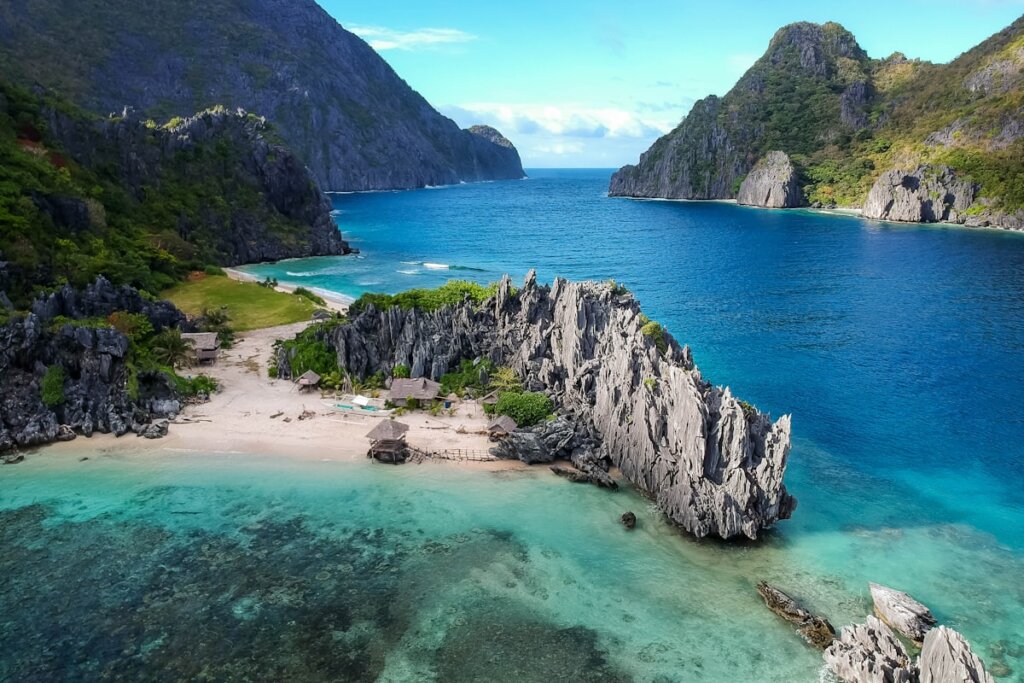
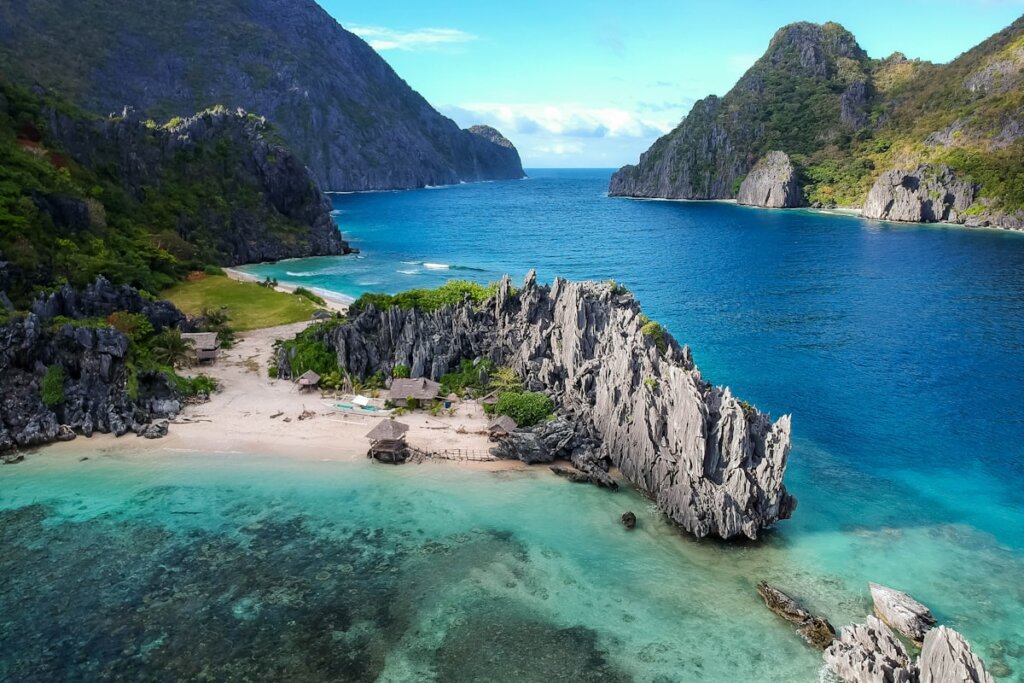
El Nido’s appeal is vertical drama. Jagged karst islands rise out of Bacuit Bay, and the best beaches and lagoons are reached by boat — Big Lagoon, Secret Lagoon, Seven Commandos Beach and Hidden Beach among them. On land, Nacpan Beach is a long golden stretch that rivals anything in the region.
Pagudpud’s appeal is wide, open coastline. Saud Beach is a broad crescent of fine, pale sand with gentle water in calm months, and the Blue Lagoon area in Maira-ira offers bright water and, in some seasons, surf-friendly waves. Nearby, the Bangui wind farm lines the shore, Patapat Viaduct winds along the cliffs, and Kabigan Falls rewards a short jungle walk. Just south, Burgos has the Kapurpurawan rock formation and Cape Bojeador Lighthouse.
If you want postcard lagoons and island-hopping, El Nido is in a different league. If you prefer driving between viewpoints and having long beaches without boat schedules, Pagudpud is excellent.
Food, atmosphere and nightlife
El Nido town has the more developed dining scene, with everything from carinderias and seafood grills to Italian, Mexican and Middle Eastern restaurants, plus beach bars at Corong-Corong and Las Cabanas for sunset drinks. Nightlife is lively in peak season without being overwhelming. Pagudpud is quieter. Resorts along Saud and Blue Lagoon serve simple Filipino and international menus, but the real culinary draw is the wider Ilocos region: empanada and longganisa in Batac and Laoag, pinakbet, bagnet and Vigan’s famous street food. Evenings in Pagudpud are about stargazing and early nights rather than bar-hopping — part of its charm for families and groups who want to switch off.
Access, Getting Around and Costs
El Nido
The fastest route is a direct flight from Manila to El Nido’s Lio Airport; the cheaper route is a flight to Puerto Princesa and a van north. Once there, you rely on tricycles and organized boats. Tours, the Eco-Tourism Development Fee and higher accommodation rates make El Nido the pricier trip. Our airport transfer guide compares routes.
Pagudpud
Fly from Manila to Laoag, then drive or take a van north for roughly an hour and a half to two hours. Many Luzon travelers simply drive the whole way, often combining Pagudpud with Vigan, Laoag and Paoay. Having your own car is a big advantage: attractions are spread out along the coast, and public transport between them is limited. Accommodation tends to be cheaper than in El Nido, and there are no compulsory boat tours to budget for.
For groups of four or more with a car, Pagudpud can be dramatically cheaper. Solo travelers or couples without a car may find El Nido’s organized tours actually simpler and better value.
Sample four-day plans
El Nido in four days: Fly to Lio on day one and spend the afternoon on the beach. Take Tour A on day two for the lagoons, Tour C on day three for hidden beaches and Matinloc Shrine, and use day four for Nacpan Beach by scooter or tricycle before your evening flight. Compare tours in our Tour A–D guide.
Pagudpud in four days: Fly to Laoag on day one and visit Paoay Church and the sand dunes before driving north. Spend day two at Saud Beach and the Bangui wind farm, day three on the Patapat Viaduct, Kabigan Falls and Blue Lagoon, and day four at Kapurpurawan and Cape Bojeador Lighthouse on the drive back to Laoag. Add Vigan if you have an extra night — its cobbled Calle Crisologo is a UNESCO World Heritage-listed historic town and pairs naturally with the trip.
Best Time to Go and Weather Risks
Both destinations are best in the dry months, roughly November or December through May, but their risks differ.
- El Nido is drier and calmer from about March to May, while December–February can bring strong amihan winds that cancel some boat routes. The southwest monsoon from June to October brings more rain and occasional tour suspensions. See our monsoon seasons guide.
- Pagudpud sits at the northern tip of Luzon and faces the open sea, so it can be very windy in the northeast monsoon months, which also bring surf. From about July to October, northern Luzon is more exposed to typhoons, which can disrupt roads and beach conditions.
Always check PAGASA forecasts before either trip. For background reading, see the Pagudpud overview and the El Nido overview.
Verdict: Which Trip Fits You?
- Choose El Nido if it is your first big Philippines beach trip, you want iconic lagoons and island-hopping, or you are celebrating something special such as a honeymoon.
- Choose Pagudpud if you have a car and enjoy road trips, want to pair beaches with heritage towns like Vigan, or are watching your budget.
- Families: Pagudpud works well for families who drive; El Nido is better for families who prefer short flights and organized tours.
- Surfers and kitesurfers: Pagudpud’s windy season can be attractive; El Nido is not a surf destination.
- Divers and snorkelers: El Nido, with far more dive operators and reef sites.
Many Luzon-based travelers end up doing both over time: Pagudpud as a drivable long weekend, and El Nido as the bigger, once-a-year trip. If you are planning El Nido for peak season, check our booking timeline; and if you need a place to stay, start with our accommodation areas guide.
Responsible travel in both destinations
Both El Nido and Pagudpud are fragile coastal environments that depend on visitors treating them well. In El Nido, follow your boat crew’s instructions in lagoons, never stand on coral, and pay the eco-tourism fee that funds conservation and waste management. In Pagudpud, stick to marked paths at Kabigan Falls and the rock formations, take your rubbish with you from beaches that lack bins, and respect private resort frontage. In both places, choose refillable water bottles, use reef-safe sunscreen and support local, family-run businesses wherever you can — small choices that help keep these beaches beautiful for the next visitors.
Key Takeaways
- El Nido is the stronger choice for lagoons, limestone scenery and organized island-hopping.
- Pagudpud suits Luzon road-trippers who want wide white-sand beaches plus Ilocos heritage stops.
- A car is almost essential in Pagudpud; El Nido works fine without one.
- Groups driving to Pagudpud can save significantly compared with flying to El Nido.
- Check monsoon and typhoon forecasts for both — northern Luzon is more typhoon-exposed from July to October.
Final Thoughts
El Nido and Pagudpud answer different travel moods. El Nido is a fly-in escape where the sea itself is the attraction and every day revolves around boats and islands. Pagudpud is a freedom-of-the-road trip, where you string together beaches, windmills, waterfalls and old Spanish towns at your own pace. Neither is objectively better — but if you have only one long holiday this year and want the views people travel across the world to see, El Nido is hard to beat. If you have a car, a free weekend and a group of friends, Pagudpud is calling.
Frequently Asked Questions
Is Pagudpud cheaper than El Nido?
Usually yes, especially for groups traveling by car. Accommodation in Pagudpud tends to cost less, and there are no mandatory island-hopping tour fees, though fuel and tolls add up on a long drive.
How long is the drive from Manila to Pagudpud?
Driving from Manila to Pagudpud typically takes about 10 to 12 hours, depending on traffic and stops. Many travelers break the trip in Vigan or Laoag.
Does Pagudpud have island-hopping like El Nido?
Not in the same way. Pagudpud is mainly a coastline you explore by road, with beaches, viewpoints and waterfalls. El Nido is built around boat tours to islands and lagoons.
Which is better for a long weekend from Manila?
Both can work. El Nido is better if you can fly directly to Lio; Pagudpud is better if you prefer to drive or want to combine the beach with Ilocos heritage sites.
What is the best month to visit Pagudpud?
The dry months from around December to May are generally best. Expect strong winds in the northeast monsoon period and higher typhoon risk from July to October.
About the Author
This guide was compiled by the El Nido Hotels Ranking editorial team, with input from local operators and ongoing on-the-ground updates.