
Scroll through any feed of dream islands and two places keep showing up: El Nido in Palawan, Philippines, and Raja Ampat in Indonesia’s far east. Both have mushroom-shaped limestone islets, lagoons the color of glass and reefs that leave divers speechless. Both promise “the edge of the world”. But one is a busy, easy-to-reach beach town and the other is a genuinely remote archipelago that takes real effort and money to reach.
This guide focuses on El Nido vs Raja Ampat specifically for snorkelers, divers and adventurous couples deciding where to spend a once-in-a-while big trip in 2026. We compare the journey, what is under the water, daily costs, comfort levels and the best months, so you can decide whether Raja Ampat’s extra effort is worth it for you, or whether El Nido already gives you everything you want.
- At a Glance: Accessible Paradise vs True Frontier
- Comparison Table: El Nido vs Raja Ampat
- Under the Water: How Big Is the Difference?
- Above the Water: Scenery and Viewpoints
- Costs: What a Week Really Costs in 2026
- Seasons and Sea Conditions
- Comfort, Connectivity and Travel Style
- Can You Combine Them?
- Frequently Asked Questions
At a Glance: Accessible Paradise vs True Frontier
El Nido is a small town with an airport, hundreds of hotels, restaurants serving everything from Filipino adobo to wood-fired pizza, and a well-oiled island hopping system. You can arrive from Manila in the morning and be swimming in a lagoon after lunch.
Raja Ampat (“Four Kings”) is a regency of roughly 1,500 islands off the western tip of New Guinea. There is no big resort town. Most visitors stay in simple family homestays, eco-resorts or on liveaboard dive boats. Electricity can be limited, mobile signal patchy, and the closest city with a proper airport, Sorong, is itself a long way from anywhere. In exchange, you get some of the most biodiverse reefs on Earth, and often have them almost to yourself.
Comparison Table: El Nido vs Raja Ampat
| Factor | El Nido, Philippines | Raja Ampat, Indonesia |
|---|---|---|
| Getting there | Direct flight Manila to El Nido (about 1h20), or Puerto Princesa plus 5–6h by van | Fly to Sorong (usually via Jakarta, Makassar or Manado), then about 2h fast ferry to Waisai |
| Typical travel time from a major hub | Half a day | 1–2 days |
| Marine life | Good reefs, turtles, reef fish, occasional reef sharks | World-class: huge fish schools, manta rays, wobbegong sharks, exceptional coral diversity |
| Snorkeling | Very good on tours; best in dry season | Outstanding, often straight off homestay jetties |
| Accommodation | Hostels to luxury island resorts | Homestays, eco-resorts, liveaboards |
| Entry or park fee | Environmental fee for the protected area | Marine park entry permit (a significant one-off fee for foreigners) |
| Nightlife and dining | Bars, live music, varied restaurants | Very limited; meals usually included where you stay |
| Best months | Late November to May | October to April (calmer seas); some areas fine year-round |
| Budget level | Moderate to high | High (flights, permits, boat transfers add up) |
Under the Water: How Big Is the Difference?
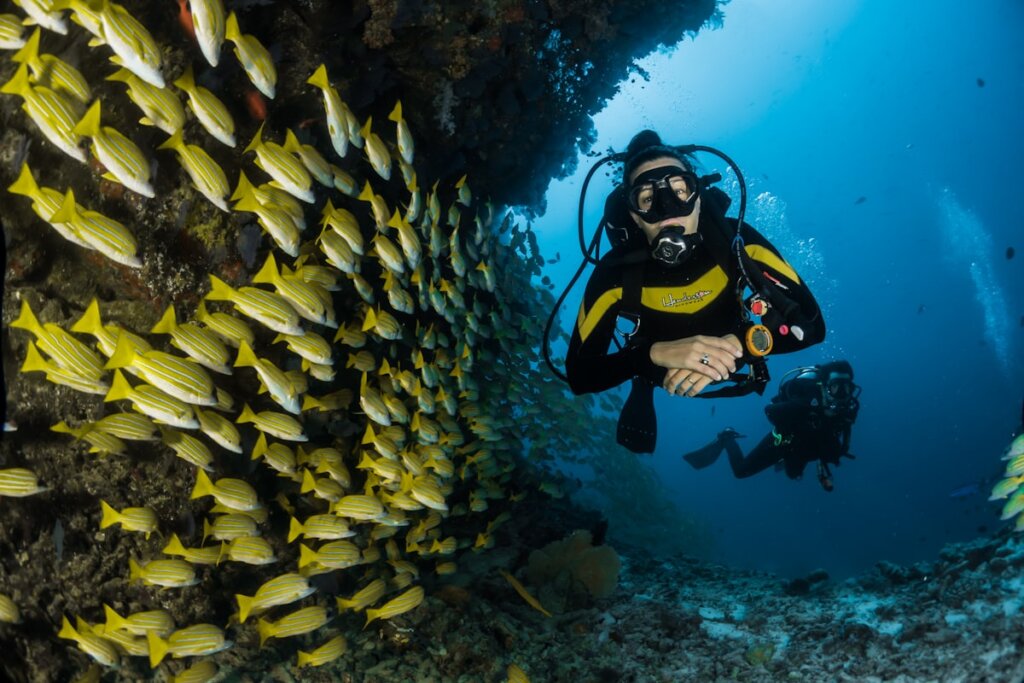
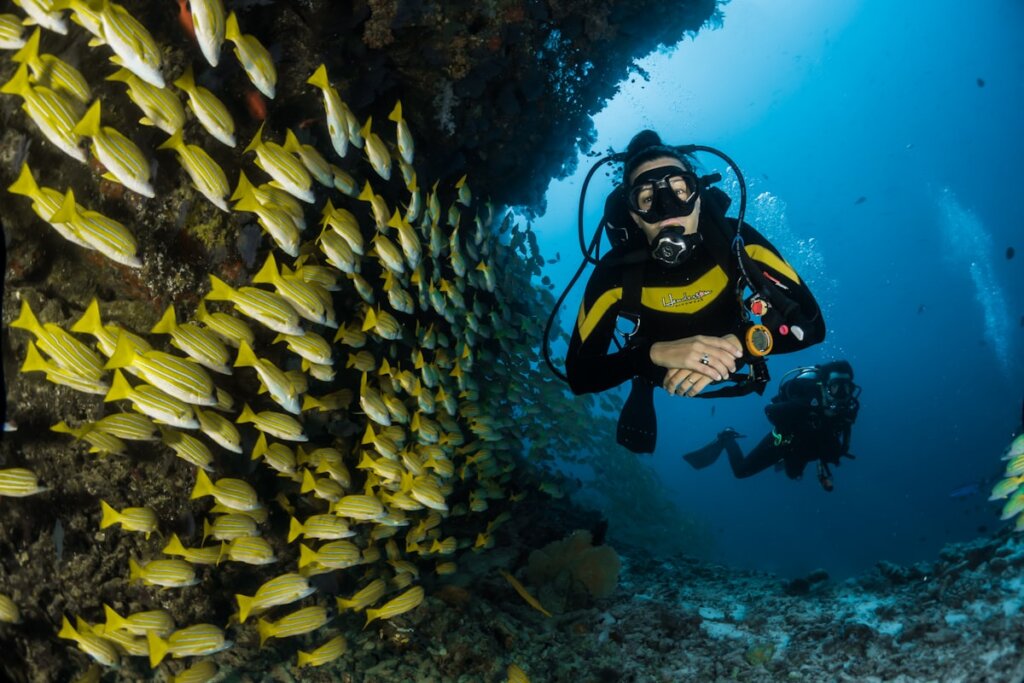
This is the question divers really care about, and the honest answer is: significant. Raja Ampat sits in the heart of the Coral Triangle, the global epicenter of marine biodiversity. Scientific surveys have recorded several hundred hard coral species and well over a thousand reef fish species in the area. The Coral Triangle Initiative explains why this region matters so much for the world’s oceans.
El Nido is also inside the Coral Triangle, and its reefs are protected within the El Nido–Taytay Managed Resource Protected Area. You will see colorful hard and soft corals, sea turtles, parrotfish, clownfish and occasionally blacktip reef sharks. However, decades of fishing pressure and tourism mean El Nido’s reefs are generally less pristine and less packed with big fish than Raja Ampat’s.
- For casual snorkelers: El Nido is more than enough. The lagoons, beaches and shallow reefs are stunning, and you get variety every day.
- For certified divers: Raja Ampat is a bucket-list step up, with currents that bring in schooling fish and mantas. El Nido is excellent for learning and relaxed fun dives; see our El Nido scuba diving guide.
- For freedivers: Both work, but El Nido has more courses and instructors; read our freediving guide.
Above the Water: Scenery and Viewpoints
Above the surface, the two are closer than you might think. Raja Ampat’s postcard views come from hiking up to viewpoints at Wayag and Piaynemo, where dozens of green karst islets scatter across turquoise water. El Nido offers similar drama from the water itself: the towering walls of the Big Lagoon, the sheer cliffs of Miniloc and Matinloc, and panoramic views from Taraw Cliff above town.
El Nido also has long, easy white-sand beaches, such as Nacpan and Las Cabanas, that Raja Ampat largely lacks in convenient form. If lounging on a classic tropical beach between activities matters, El Nido has the edge. Compare the lagoon options in our Big Lagoon vs Small Lagoon guide.
Costs: What a Week Really Costs in 2026
Raja Ampat’s reputation for being expensive comes mostly from getting there and moving around, not from daily living. Homestays usually include three meals, but boat transfers between islands are pricey, and the marine park permit is a notable one-off cost.
| 7-day estimate (per person, mid-range) | El Nido | Raja Ampat |
|---|---|---|
| Domestic flights | USD 100–250 return from Manila | USD 250–500 return from Jakarta or Bali |
| Accommodation | USD 50–150 per night | USD 40–80 per night homestay (meals included); USD 200+ eco-resort |
| Activities | USD 30–60 per tour day; USD 70–110 per two-dive day | Boat trips and dives often USD 100+ per day |
| Fees | Environmental fee (modest) | Marine park permit (significant) |
| Rough week total | USD 900–1,600 | USD 1,500–3,000+ (liveaboards much more) |
Figures are rough 2026 estimates excluding international flights. Always check current permit prices with official sources before you travel.
Ways to keep costs down
- El Nido: stay in town rather than Corong-Corong or Lio, join shared group tours instead of private boats, eat at local carinderias for lunch, and travel in shoulder months such as November or early June when room rates drop noticeably.
- Raja Ampat: book a homestay that includes meals and arranges shared boat transfers, base yourself on one island for several nights rather than hopping constantly, and split boat charters with other guests. Booking domestic flights to Sorong well in advance makes a big difference.
In both places, bring enough cash. El Nido has ATMs but they can run dry on busy weekends, while most of Raja Ampat has no ATMs at all outside Waisai and Sorong.
Seasons and Sea Conditions
El Nido’s dry season runs from roughly late November to May, with the calmest, clearest water typically in March to May. From June to October the southwest monsoon brings rain and swells that can cancel some tours. The PAGASA weather bureau issues gale warnings that local authorities follow strictly.
Raja Ampat lies just south of the equator and is diveable year-round, but October to April is usually considered the best period, with calmer seas for crossings. From around June to September, stronger southerly winds can make some southern areas and long boat crossings rough, and some liveaboards reposition elsewhere.
If your holiday falls between December and April, both destinations are in good shape, which makes the decision purely about budget, effort and what you want from the trip.
Comfort, Connectivity and Travel Style
This is where many couples make their decision. El Nido has reliable-enough Wi-Fi in most hotels, ATMs, pharmacies, clinics and dozens of restaurants. You can mix adventure days with spa days, sunset cocktails and good coffee.
Raja Ampat is about simplicity. Homestays may be open-sided wooden huts over the water with mosquito nets and shared bathrooms. Meals are typically rice, fish and vegetables. Power may run only in the evening from a generator or solar. For many travelers this is the magic of the place; for others it is a deal-breaker. Read the official overview from Wonderful Indonesia to get a feel for the region before committing.
- Choose El Nido if you want comfort, variety, short travel time, nightlife and a range of hotels, or if this is your first Southeast Asian island trip.
- Choose Raja Ampat if you are a keen diver or snorkeler, can spare two weeks or more, are comfortable with basic lodging and want to escape crowds entirely.
Can You Combine Them?
Combining both in one trip is possible but rarely efficient: there are no practical direct links between Palawan and West Papua, so you would route through Manila and Jakarta or Bali. A smarter combination for most travelers is El Nido plus Coron by ferry or expedition boat in the Philippines, which adds wreck diving and more karst lakes; see our El Nido vs Coron comparison. Raja Ampat pairs naturally with Bali or Komodo in Indonesia.
If you are planning the Philippine side, start with our guide to getting to El Nido and follow the protected area rules to help keep Bacuit Bay’s reefs healthy.
Frequently Asked Questions
Is Raja Ampat better than El Nido for diving?
For experienced divers, yes. Raja Ampat has greater coral and fish diversity, more big marine life and fewer divers. El Nido is excellent for beginners, courses and relaxed reef dives.
How long do you need in Raja Ampat compared with El Nido?
Plan at least 7 to 10 days on the ground in Raja Ampat to justify the long journey. In El Nido, 4 to 5 days covers the main island hopping tours and a beach day or two.
Is El Nido cheaper than Raja Ampat?
Usually, yes. El Nido is cheaper and faster to reach, and island tours are inexpensive. Raja Ampat costs more because of domestic flights, boat transfers and the marine park permit.
Do I need a permit to visit Raja Ampat or El Nido?
Raja Ampat requires a marine park entry permit for foreign visitors, typically bought on arrival in Sorong or Waisai. El Nido charges an environmental fee for visitors to its protected area.
Which is better for a honeymoon?
El Nido suits couples who want comfort, private island resorts and good dining. Raja Ampat suits adventurous couples who prefer remoteness, simple eco-lodges and world-class snorkeling.
Featured image: Elias Levy via Wikimedia Commons (CC BY 2.0)