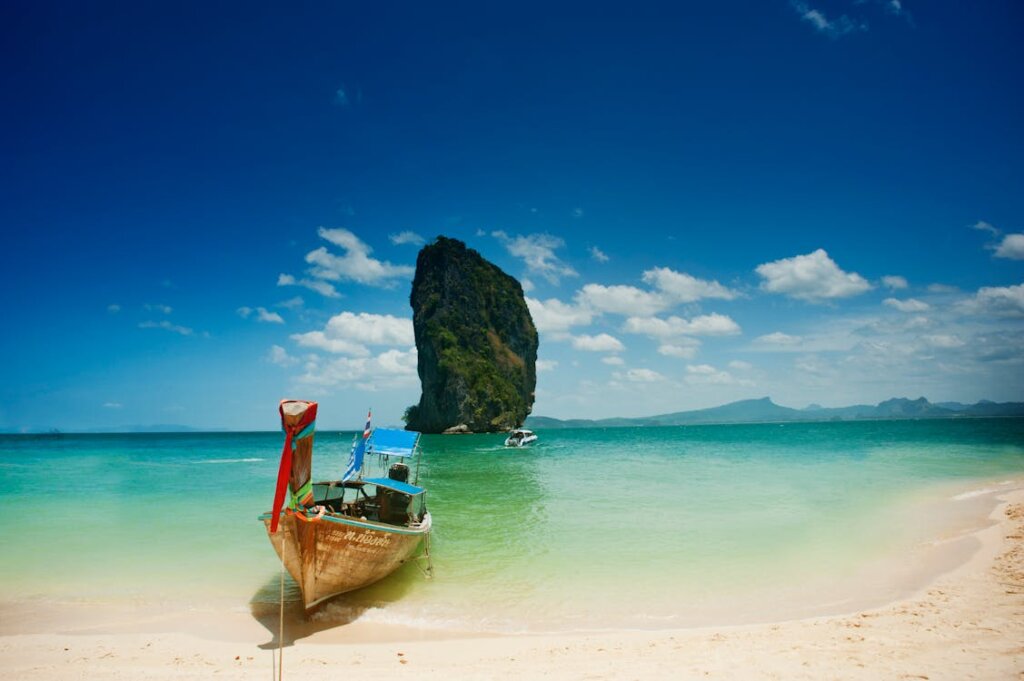

Most El Nido accommodation guides sort hotels by area: town, Corong-Corong, Caalan, Marimegmeg, Lio or Nacpan. That is useful, but it misses a second decision that shapes your stay just as much: do you want to sleep on the sand or up on the slope? Two hotels a five-minute tricycle ride apart can feel completely different depending on whether you step out of your room onto the beach or onto a terrace 60 metres above Bacuit Bay.
This guide focuses on the hilltop-versus-beachfront choice specifically for couples, families and first-time visitors who have already picked a rough area and now need to choose between two or three shortlisted properties. We compare the trade-offs honestly, including the ones listing photos never show you: stairs, road noise, humidity, sunset angles and how far you are from the tour boats.
Quick Answer: Who Should Book Which
If you only read one section, read this one. Beachfront rooms suit travellers who want to swim before breakfast, have small children, have limited mobility, or plan to spend afternoons lounging rather than exploring. Hilltop and hillside rooms suit travellers who value the view over convenience, want a breeze and a bit more privacy, and do not mind using a tricycle for every trip to town.
There is also a middle ground: hillside rooms at beachfront resorts. Many properties along Corong-Corong and Caalan are built into the slope, so the pool and restaurant sit near the water while the upper room blocks climb the hill. Ask which block your room is in before paying extra for a “sea view” category.
Side-by-Side Comparison Table
| Factor | Beachfront | Hilltop / Hillside |
|---|---|---|
| View | Eye-level sea and sand; islands can look flat | Panoramic bay and karst views; best for photos |
| Access to the water | Steps from the sand | Walk or ride down; some have no beach at all |
| Stairs and slopes | Mostly flat | Often 50–150+ steps; rarely lifts |
| Breeze and humidity | Can feel still and humid at midday | Usually breezier, especially in the dry season |
| Noise | Bars, boats and generators near town beach | Quieter, but some sit next to the highway |
| Sunset | Excellent on west-facing Corong-Corong and Marimegmeg | Excellent from west-facing slopes; blocked on some east sides |
| Typical price for the same quality | Higher premium for sand access | Often cheaper per square metre and view |
| Best for | Families, mobility needs, swimmers | Couples, photographers, light packers |
The Case for Beachfront Rooms
The appeal is obvious: you wake up, walk ten steps and you are in the water. On a trip built around island hopping, that also means an easy late-afternoon swim when you come back sandy and tired from Tour A or Tour C. For families, beachfront is often the only realistic option because it removes the daily negotiation of steep steps with sleepy children and beach bags.
Beachfront in El Nido does not mean the same thing everywhere. On the town beach the “beach” is also a working harbour: dozens of bangka boats anchor there, tour groups load in the morning, and the water close to shore is not always inviting. On Corong-Corong the shoreline is calmer, faces west for sunset and has a string of mid-range resorts. Caalan beach is small and sheltered, while Marimegmeg and Las Cabanas are properly scenic but a ride away from town. Further out, Lio and Nacpan offer long sandy stretches with a far quieter feel.
If you want a deeper breakdown of each area, our barangay-by-barangay stay guide covers the neighbourhoods in detail, and our list of beachfront resorts for sunset views narrows the shortlist.
Beachfront downsides nobody mentions
- Night noise near town. Beach bars on the town side can play music late, and early tour departures bring engines and voices from around 8 a.m.
- Still, heavy air. Low-lying rooms behind vegetation can feel humid; air-conditioning matters more here.
- Tide and seaweed. Some stretches get shallow at low tide or collect seaweed at certain times of year, so the swim you imagined may need timing.
- Premium pricing. You pay for the sand, sometimes 20–40% more than a similar room up the hill.
The Case for Hilltop and Hillside Rooms
El Nido’s landscape is dramatic because of the limestone cliffs behind town and the karst islands scattered across Bacuit Bay. From a hillside balcony, you actually see that geography: layers of islands fading into the distance, boats tracing lines across the water and the sun dropping behind Cadlao or the outer islands. Many travellers say the view from their room was the moment the trip felt real.
Hillside properties are common on the slopes above Corong-Corong, above Caalan and along the national road heading south toward Lio. Some are small boutique hotels with only a handful of rooms and a plunge pool; others are larger resorts terraced into the hill. Because land away from the shoreline is generally cheaper, hilltop hotels often give you a bigger room or a private balcony at the same nightly rate as a basic beachfront room.
There are practical benefits too. Higher ground usually catches more breeze, which helps in the hot months. Rooms set back from the main beach strip are generally quieter at night, a point we also cover in our guide to quiet rooms and sleeping well in El Nido.
Hilltop downsides to plan for
- Stairs, lots of them. Many hillside hotels have long stone or concrete staircases and no lift. Porters usually carry bags on arrival, but you will climb every time you come home.
- Tricycle dependency. Walking to town from the upper slopes is possible but hot and steep. Budget for a tricycle ride each time you head out, especially after dark.
- Slippery paths in rain. During the southwest monsoon, wet steps and steep driveways demand care.
- Not every hill faces the sunset. Check the orientation: a west-facing slope toward Bacuit Bay gets the classic sunset; some slopes face inland.
How the Season Changes the Decision
El Nido’s weather follows two main monsoons. From roughly November to May the dry northeast monsoon (amihan) brings calmer seas on the Bacuit Bay side and clearer skies, which makes the high-view rooms spectacular. From about June to October the southwest monsoon (habagat) brings more rain and stronger winds to west-facing shores. You can read the official climate background on the PAGASA climate page.
In the wet months, a beachfront room on an exposed west-facing shore can be windy and the sea choppy. A hillside room with a covered terrace may actually be the more comfortable choice, as long as the paths are well built. In the dry season, both work well, and the question becomes whether you would rather swim or gaze. For a month-by-month picture, our October weather guide is a good example of how shoulder months behave.
Checklist: Questions to Ask Before You Book
- How many steps from the road or reception to my room? Ask for a number, not “a few”.
- Is there a beach I can actually swim at within walking distance?
- Which way does my balcony face? West toward the bay means sunsets.
- Is the room next to the national road or a bar?
- Does the hotel offer a shuttle to town? Some hillside properties run free or scheduled transfers.
- Is the room air-conditioned or fan-cooled? Our aircon vs fan room comparison explains the cost trade-off.
- What is the backup power situation? Brownouts still happen in parts of northern Palawan; ask whether the property runs a generator at night.
Matching the Room to Your Travel Style
Families with young kids: beachfront, ideally on a calm stretch like Corong-Corong or Caalan, and on the ground floor. The time you save not climbing stairs is time spent in the water.
Honeymooners and couples: hillside rooms with a west-facing balcony are hard to beat for privacy and sunsets. Pair a few nights on the hill with a final night or two on the beach if you can.
Older travellers or anyone with knee or mobility issues: beachfront or flat-access properties, and confirm the path from the road is paved.
Budget travellers: hillside guesthouses often deliver the best value view in El Nido. Our comparison of guesthouses versus resorts helps you judge what you are really paying for.
Photographers and drone users: hilltop, no contest, but check local rules before flying; the Civil Aviation Authority of the Philippines publishes drone guidance on its official site.
A smart split-stay strategy
You do not have to choose just one. Many visitors spend four or five nights in El Nido, which is enough to split the stay: start in a hillside hotel for the views and quiet while you do the main island tours, then finish on the beach for lazy last days. Because the areas are close together, moving hotels costs you only a short tricycle ride and a morning. It also lets you compare, which is half the fun.
For wider context on the destination, Wikipedia’s El Nido, Palawan entry gives a good overview of the municipality’s geography and protected-area status.
Prices, facilities and access vary between properties and change over time. Always confirm current details directly with the hotel before booking.
Frequently Asked Questions
Are hilltop hotels in El Nido cheaper than beachfront hotels?
Often, yes. For a similar standard of room, hillside properties usually cost less than beachfront ones because you are not paying the premium for direct sand access, though luxury hilltop villas can be very expensive.
Can I walk from a hilltop hotel to El Nido town?
Sometimes, but it is usually steep and hot. Most guests use tricycles, which are cheap and easy to flag down or call via reception.
Which beachfront area is best for swimming?
Calmer, less busy stretches such as Corong-Corong, Caalan, Marimegmeg and Lio are generally better for swimming than the town beach, which doubles as a busy boat harbour.
Are hillside hotels suitable for families with toddlers?
They can be, but long staircases make daily life harder. If you choose one, ask for a room close to reception and the pool.
Is the view better from hilltop hotels?
Generally yes. Elevation lets you see the layered islands of Bacuit Bay, which beachfront rooms at eye level cannot match.