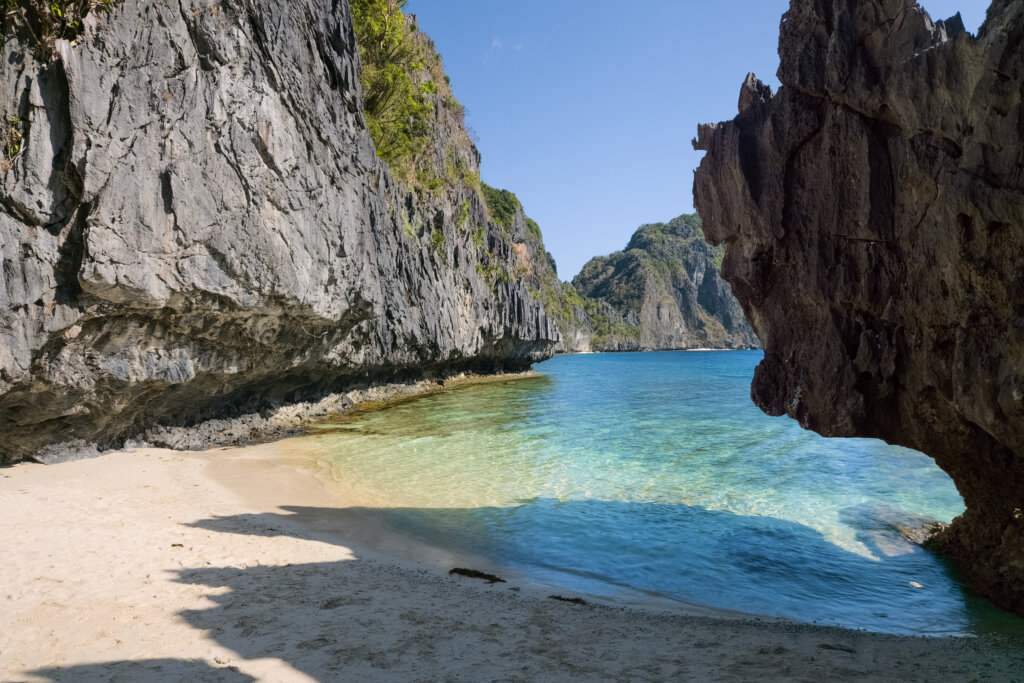
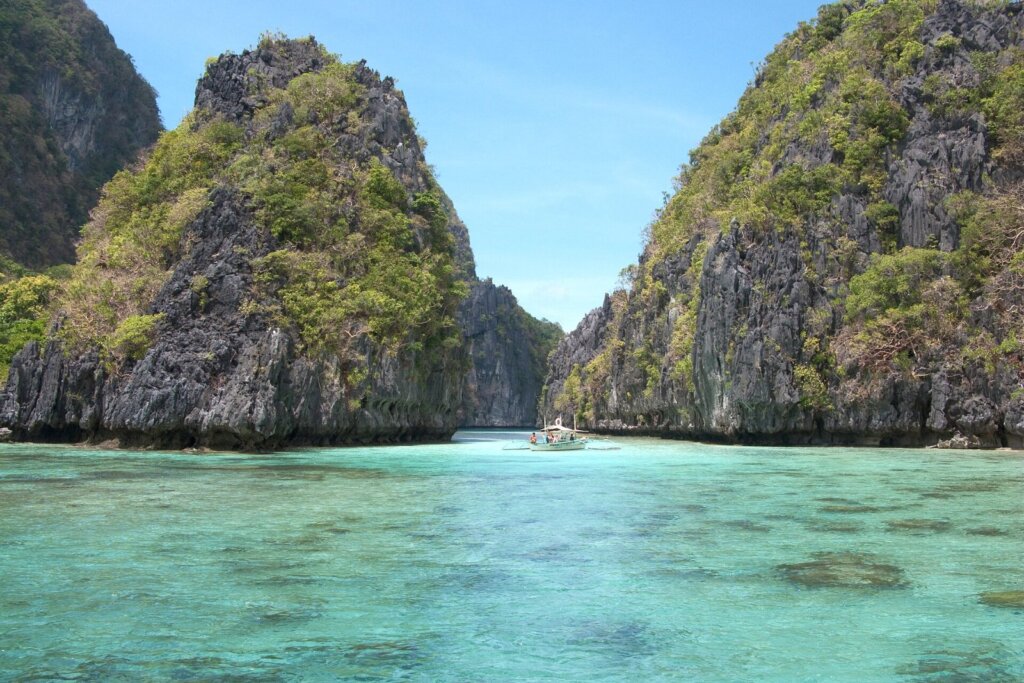
For shore-based open-water swims in El Nido, Lio Beach and Las Cabanas are the most reliable all-rounders, Corong-Corong works best at mid-to-high tide, Nacpan is beautiful but exposed to wind and waves from November to February, and the main town beach is best avoided because of boat traffic.
Most El Nido beach guides rank sand, sunsets and photo spots. This guide focuses on something different: where confident swimmers can actually swim — continuous strokes, 500 metres to a few kilometres, starting from the shore — without dodging bangkas or standing up on a seagrass flat every 20 metres. It is written for triathletes, masters swimmers and anyone who prefers a long swim to a short snorkel.
We compare six beaches on the criteria swimmers care about: depth near shore, boat traffic, wind and wave exposure, tidal effects, and ease of access from town. Conditions vary by season and day, so treat this as a starting point and always check the sea before you go in.
How We Compared the Beaches
Each beach was assessed on five factors:
- Depth profile: how quickly the water becomes deep enough to swim freestyle without touching the bottom.
- Boat traffic: how many tour boats, island-hopping bangkas and resort boats use the area, and at what times.
- Exposure: how much the beach is affected by the Amihan northeast winds (roughly November–February) and the Habagat southwest monsoon (roughly June–October).
- Tide sensitivity: whether low tide exposes seagrass, rocks or long shallows.
- Access: distance from El Nido town and ease of reaching the beach early in the morning.
For a broader explanation of how wind and swell change through the year, see How to Read El Nido Sea Forecasts Before a Boat Trip.
How the Seasons Change the Rankings
No single beach wins all year. From roughly November to February, the Amihan wind blows from the northeast, which tends to churn up north- and east-exposed beaches such as Nacpan while leaving much of Bacuit Bay comparatively calm. From March to May, the hot dry season usually brings the flattest water of the year across most beaches, and this is when Nacpan becomes a realistic swim option. From June to October, the Habagat southwest monsoon can push swell and chop into west-facing shores, and rain reduces visibility near river mouths. During those months, keep swims short, stay close to shore and be ready to skip a session if the water looks disturbed.
Our ratings above reflect typical conditions in the drier months. On any given day, local observation beats any guide: watch the water for five minutes before getting in, look for breaking waves, foam lines or fast-moving debris that suggest currents, and ask beachfront staff or boat crews how the sea has been behaving.
Open-Water Swim Spot Comparison Table
| Beach | Depth near shore | Boat traffic | Wind/wave exposure | Best for |
|---|---|---|---|---|
| Lio Beach | Gradual; swimmable at most tides | Low to moderate | Moderate | Long parallel swims along a long beach |
| Las Cabanas / Marimegmeg | Moderate; deepens fairly quickly | Low in the morning, rises in the afternoon | Sheltered most of the year | Morning laps; sunset easy swims |
| Corong-Corong | Shallow with seagrass at low tide | Moderate; resort and tour boats | Sheltered in Amihan | Mid-to-high tide swims close to accommodation |
| Caalan Beach | Moderate; small cove | Low | Sheltered | Short loops and technique work |
| Nacpan Beach | Deepens with surf zone | Very low | High in Amihan season | Calm-day swims in the dry season only |
| El Nido Town Beach | Moderate | Very high (tour boat hub) | Sheltered | Not recommended for swimming |
Lio Beach and Las Cabanas: The Best All-Rounders
Lio Beach, north of town near the airport, has a long stretch of white sand that makes it easy to swim parallel to shore for a kilometre or more without leaving the beach’s line. The depth profile is gradual, but you can usually swim freestyle a short distance out. Boat traffic is lighter than in town, though resort boats operate from the area. Swim early: wind and activity pick up through the day.
Las Cabanas (often combined with neighbouring Marimegmeg Beach) is a favourite for sunsets, but it’s also one of the better options for morning swims. The water deepens relatively quickly, making it feel more like a “real” open-water swim. It is generally sheltered and calmer than north-facing beaches during the Amihan months. Afternoons become busy with visitors arriving for sunset, so the best swim window is before late morning.
Both beaches are an easy tricycle ride from town. If you’re planning a full training block, our endurance training by month guide explains which seasons suit open-water sessions best.
Sample Swim Plans
Beginner open-water swimmer: 3 × 200 m out-and-back parallel to shore at Las Cabanas, with a minute’s rest standing in shallow water between repeats. Intermediate: continuous 1,000–1,500 m along Lio Beach, turning at clearly visible landmarks such as a resort building or a moored boat. Experienced: 2,500 m+ along Lio on a calm morning with a kayak escort, ideally finishing before resort boat activity increases. Whatever your level, agree on a turnaround time with your buddy and stick to it.
Corong-Corong and Caalan: Swims Near Town
Corong-Corong is where many visitors stay, which makes it convenient for a dawn swim. The trade-off is depth: at low tide, wide shallows and seagrass beds stretch out from the shore, and you may need to wade a long way before swimming. At mid-to-high tide, it becomes a pleasant, sheltered option with views of the limestone islands. Seagrass beds are important habitat, so avoid standing or kicking up sediment where possible. More about the area is in our Corong-Corong neighbourhood guide.
Caalan Beach, a small cove at the northern edge of town, is quieter and suits shorter loops, drills or technique work. It isn’t long enough for continuous distance swims without turning frequently, but it’s a good place to get comfortable in the water before attempting longer swims elsewhere.
Nacpan Beach and Why the Town Beach Is a No
Nacpan Beach is roughly a 40–60 minute ride north of town and is one of the longest, most scenic beaches in the area. On calm days, usually in the dry season, it offers very low boat traffic and wide-open water. However, it is exposed to the open sea. During the Amihan season, wind and waves can make it unsafe for swimming, with a surf zone and possible rip currents. If waves are breaking consistently, choose another beach.
El Nido Town Beach is the departure point for most island-hopping tours. From early morning, dozens of bangkas move through the water, and visibility for boat captains is limited. Swimming there is not recommended, especially between roughly 8 a.m. and 5 p.m. when tours depart and return.
The Philippine Coast Guard issues sea travel advisories that are worth checking when weather systems are near Palawan.
Open-Water Safety for El Nido Swimmers
Drowning is a leading cause of unintentional injury deaths globally, according to the World Health Organization, and confident swimmers are not immune. Follow these rules:
- Never swim alone. Bring a buddy or arrange a kayak escort for longer swims.
- Use a bright tow float and cap. Visibility to boats is your most important safety tool.
- Swim parallel to shore, never across boat channels or toward islands without support.
- Watch for jellyfish season. Stingers can appear at certain times of year; know the first aid steps in our jellyfish sting first aid guide.
- Check the weather. PAGASA publishes forecasts and gale warnings. Avoid swimming during thunderstorms.
- Know basic rescue skills. The Philippine Red Cross runs water safety and first aid training.
If you’re not yet comfortable in open water, start with our adult swim lessons guide or the non-swimmers’ guide before attempting longer distances.
Best Times of Day and Tide
Early morning, from sunrise to around 8 a.m., offers the calmest wind, the least boat traffic and the coolest air. Mid-to-high tide is preferable at shallow beaches like Corong-Corong, while deeper beaches like Las Cabanas are less tide-sensitive. Tide tables are available from local dive shops, many hotels, and tide apps; check them the evening before.
What to Bring for a Swim Session
- Bright silicone cap and inflatable tow float with a dry compartment
- Goggles with tinted lenses for the low morning sun
- Reef-safe sunscreen applied at least 15 minutes before entering
- Water and a light snack for after the swim
- Cash for a tricycle back and a fresh coconut on the beach
Key Takeaways
- Lio Beach and Las Cabanas are the most dependable beaches for long, shore-based swims.
- Swim Corong-Corong at mid-to-high tide to avoid long shallows and protect seagrass.
- Nacpan is spectacular on calm dry-season days but often unsafe in the Amihan months.
- Avoid swimming at El Nido Town Beach because of heavy tour boat traffic.
- Always swim with a partner, a bright cap and a tow float, parallel to shore.
Frequently Asked Questions
Which El Nido beach is best for open-water swimming?
Lio Beach and Las Cabanas are the most reliable for longer swims from shore, with manageable depth, lower boat traffic in the mornings and reasonable shelter for much of the year.
Can I swim at El Nido Town Beach?
It is not recommended. The town beach is the main departure point for island-hopping boats, and heavy traffic makes swimming risky during the day.
Is Nacpan Beach safe for swimming?
On calm days, especially in the dry season, it can be. During the Amihan months (roughly November to February) wind and waves often make it unsafe. If waves are breaking consistently, swim elsewhere.
What time is best for an open-water swim in El Nido?
Early morning, from sunrise to around 8 a.m., when wind is light, boat traffic is low and the air is cooler.
Do I need a tow float in El Nido?
Yes. A bright tow float makes you far more visible to boat captains and gives you something to rest on if needed.
About the Author
This guide was compiled by the El Nido Hotels Ranking editorial team, with input from local operators and ongoing on-the-ground updates.